
Virtual Power Plant Market Report (2022 - 2032)
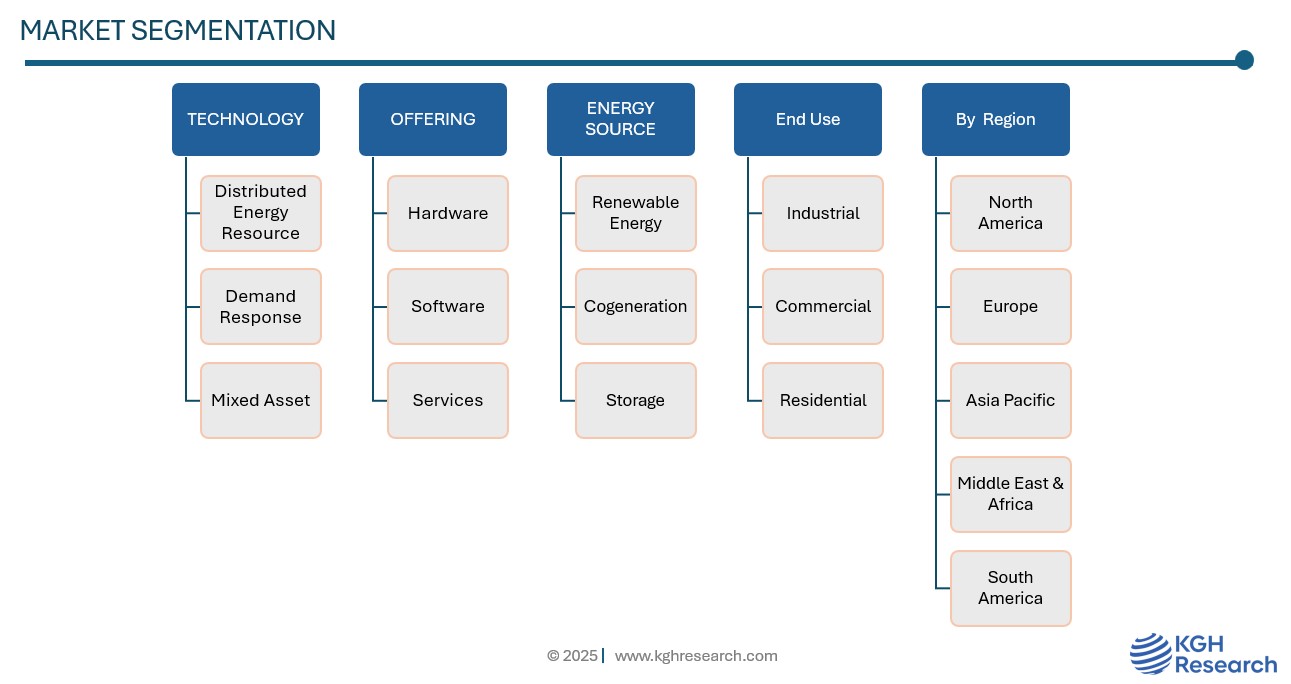
VIRTUAL POWER PLANT MARKET SIZE & SHARE BY TECHNOLOGY (DISTRIBUTED ENERGY RESOURCE, DEMAND RESPONSE, MIXED ASSET), BY OFFERING (HARDWARE, SOFTWARE, SERVICES), BY ENERGY SOURCE (RENEWABLE ENERGY COGENERATION, STORAGE), END USE (INDUSTRIAL, COMMERCIAL, RESIDENTIAL) AND BY REGION & COUNTRY – FORECAST TO 2032
| Report Code: E&P4014-0202 | Number of Pages: 400 | Report Format: PDF, EXCEL, PPT |
|---|---|---|
|
Trend Year: 2022 – 2024 |
Forecast Period: 2025 – 2032 |
Publish Date: JULY 2025 |
- Report Summary
-
Tables of Content
- Segmentation
- Methodology
- User License & Pricing
- Sample Copy
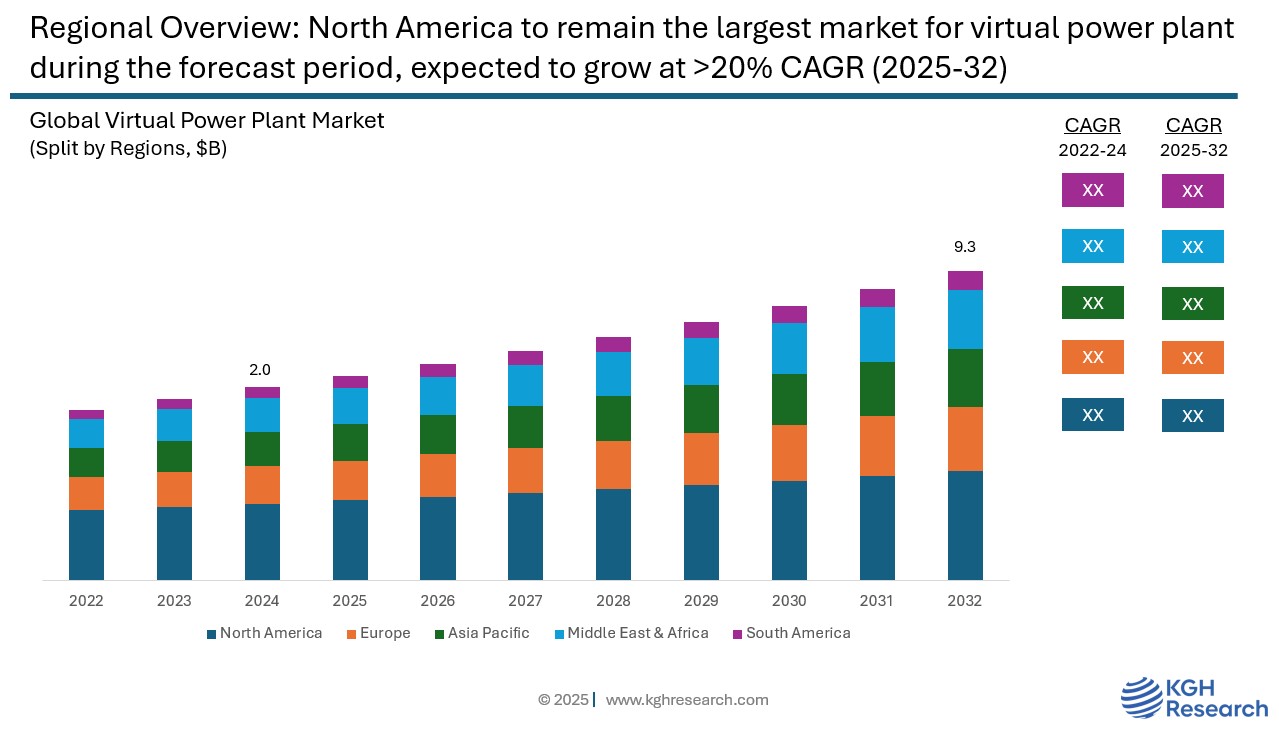
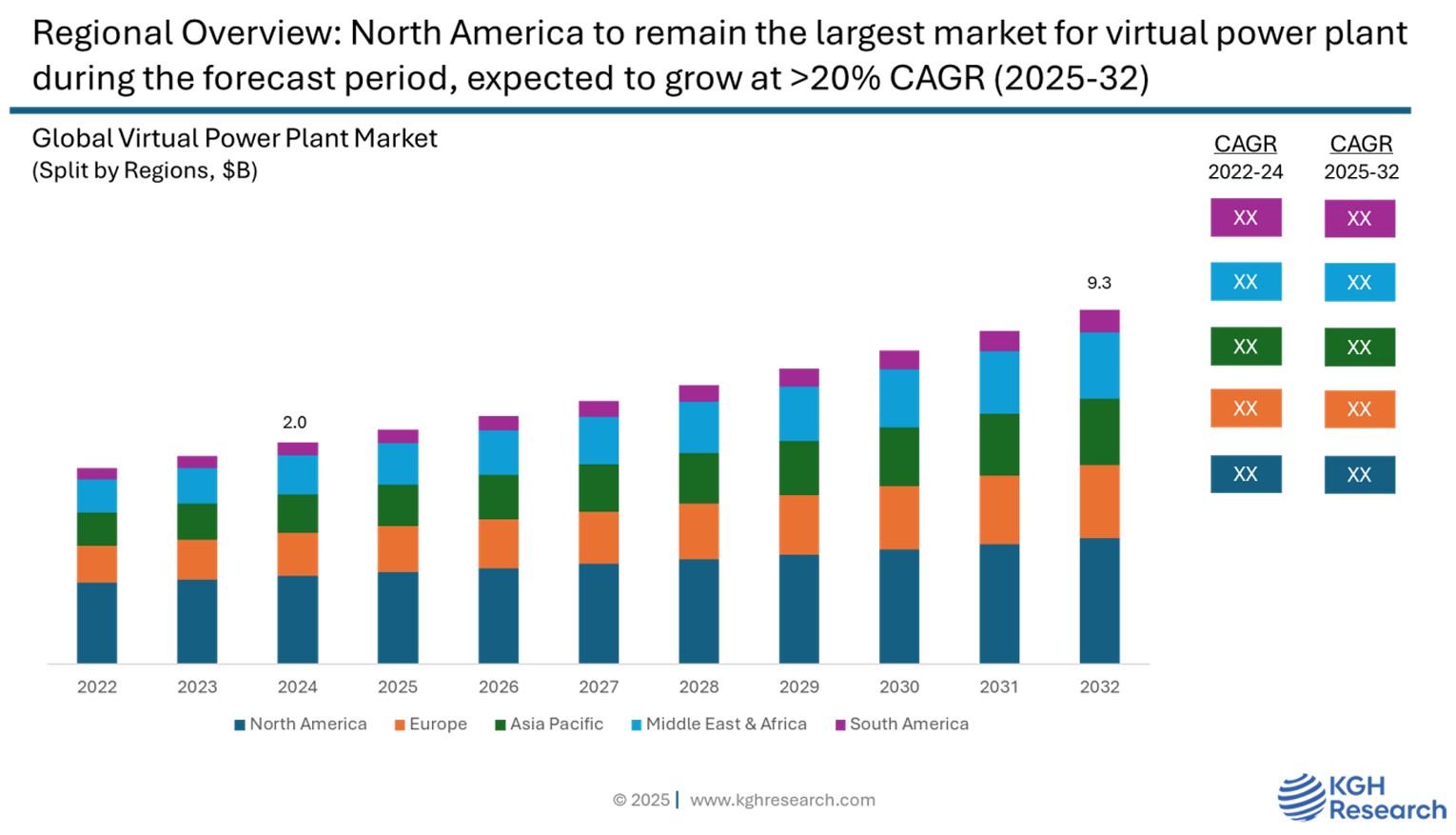
Market Overview: The global virtual power plant market was valued at approximately USD 2.0 billion in 2024 and is projected to grow at a compound annual growth rate (CAGR) of 21.1% from 2025 to 2032. The market is fueled by the global shift toward cleaner, smarter, and more decentralized energy systems. With more solar panels, wind farms, and other renewables coming online, there’s a clear need for solutions that can bring these scattered energy sources together—and that’s where VPPs step in. They help balance supply and demand, keep the grid stable, and make better use of green energy. As electricity use climbs and the pressure to manage it more efficiently increases, VPPs offer a smart, real-time approach to energy coordination. Supportive government policies for clean energy adoption further accelerate market growth.
MARKET DYNAMIC
GROWTH DRIVERS:
- Growing adoption of renewable energy which creates a need for aggregation and optimization
- Innovations in IoT, AI, machine learning, and cloud platforms enhance real-time monitoring and control of distributed energy resources
- Grid reliability & flexibility needs
- Supportive government policies promoting clean energy and smart grid deployment drive VPP investments
- Cost savings & energy efficiency
NEW GROWTH OPPORTUNITIES:
- Countries with growing renewable adoption and grid challenges present strong potential for VPP deployment
- Growing adoption of smart grids
- Growing adoption of Electric Vehicle (EV)
- Increasing focus on carbon neutrality and net-zero targets encourages utilities and industries to invest in VPP solutions
MARKET RESTRAINTS:
- High initial setup costs to deploy monitoring and control system
- Complex integration of diverse DERs and other components
- Cybersecurity concerns
- Inadequate infrastructure
GROWTH HURDLES:
- Regulatory & market uncertainty
- Interoperability issues
- Limited awareness
- Dependence on reliable connectivity
Technology: Market Insights
In the virtual power plant market by technology, the mixed asset segment is expected to hold the largest share during the forecast period due to its flexibility, scalability, and comprehensive approach to energy management. Mixed asset VPPs integrate various types of distributed energy resources, including solar photovoltaic, wind turbines, battery storage systems, electric vehicles, demand response units, and even traditional backup generators. This diverse mix allows for better optimization of energy supply and demand across different times of the day and weather conditions, enhancing grid reliability and efficiency. The ability to leverage the strengths of multiple asset types helps balance intermittency in renewable sources, reduce peak load pressures, and provide ancillary services to the grid. Furthermore, mixed asset VPPs are well-suited for both residential and commercial applications, making them attractive for utilities, energy retailers, and independent power producers. As energy systems become more complex and distributed, the demand for flexible solutions like mixed asset VPPs is expected to rise significantly, driving their dominance in the market.
Energy Source: Market Insights
By energy source, renewable energy is expected to be the largest segment during the forecast period, driven by the global push toward sustainable energy generation. The increasing deployment of renewable energy, such as wind and solar, across residential and commercial applications has created a growing need for intelligent systems that can efficiently manage and integrate these intermittent sources. Virtual power plants play a crucial role in aggregating renewable energy from various distributed locations, ensuring their optimized use while maintaining grid stability. Governments and regulatory bodies are actively promoting renewable adoption through subsidies, incentives, and ambitious decarbonization targets, further increasing the share of renewables in the VPP market. As the cost of renewable technologies continues to fall and their penetration deepens, renewable-based VPPs offer a scalable and environmentally friendly solution to meet rising energy demands, reinforcing their leading position in the market.
End Use: Market Insights
Based on end use, the industrial segment leads the virtual power plant market with the largest share, owing to the high and variable energy demands of industrial operations. Industries are increasingly adopting VPP solutions to optimize their energy consumption, reduce operational costs, and improve energy reliability. By integrating renewable energy sources, battery storage, and demand response systems, industrial facilities can better manage peak loads, participate in energy trading, and enhance grid stability. Industries are often early adopters of advanced technologies, making them more likely to implement smart energy management systems like VPPs. Regulatory pressure to reduce carbon emissions and improve energy efficiency also drives industrial users to invest in cleaner and more flexible energy solutions.
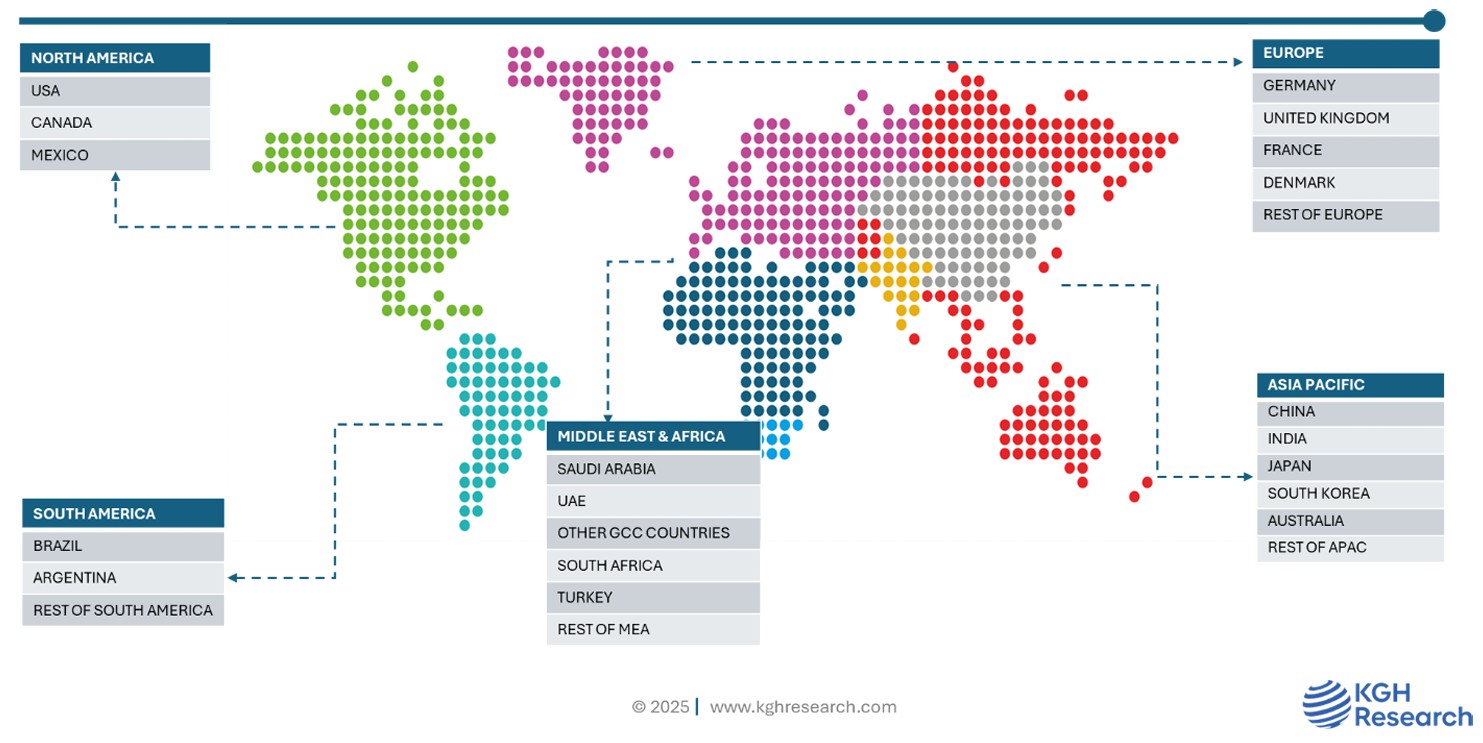
Regional: Market Insights
North America holds the largest market share in the virtual power plant (VPP) market, driven by its advanced energy infrastructure, widespread adoption of renewable energy, and supportive regulatory environment. The United States leads the region due to significant investments in smart grid technologies, increasing integration of distributed energy resources (DERs), and growing demand for grid flexibility and reliability. Federal and state-level initiatives promoting clean energy transitions, along with incentives for solar, wind, and battery storage, have accelerated VPP deployment. The presence of leading technology providers and energy companies, along with a high level of digitalization in energy systems, has enabled the rapid implementation of VPP solutions across residential, commercial, and industrial sectors. As utilities and grid operators in North America continue to prioritize sustainability, efficiency, and resilience, the region remains at the forefront of VPP market growth.
Federal initiatives such as the Inflation Reduction Act (IRA) and state-level programs in California, New York, and Texas have played a pivotal role in incentivizing renewable energy adoption and demand-side energy management, both of which fuel VPP growth. Moreover, North America benefits from a high level of digital penetration, making it easier to implement AI- and IoT-enabled software platforms that allow for real-time energy optimization and remote control of energy assets. The industrial and commercial sectors, especially in energy-intensive regions, are also rapidly embracing VPPs to enhance energy efficiency and reduce costs. In addition, the rising number of pilot programs and large-scale deployments by leading utilities such as Pacific Gas & Electric (PG&E), Duke Energy, and Con Edison further demonstrate the region’s commitment to expanding VPP capabilities. The well-established presence of global and regional VPP technology providers including Tesla, Schneider Electric, and Siemens has enabled faster product development, commercialization, and adoption.
Competition: Virtual Power Plant
The Virtual Power Plant market is highly competitive, with key players focusing on innovation, product efficiency, and strategic partnerships to strengthen their market position. Major companies include General Electric Company, Schneider Electric, Siemens, Tesla, and Shell. These players are investing in R&D to develop VPP tailored for applications in commercial, residential and industrial sectors, driving ongoing competition and technological advancement in the market.
General Electric Company, Schneider Electric, Siemens, Tesla, and Shell are among the leading companies active in the market.
Siemens AG is a global technology company headquartered in Munich, Germany, with a strong presence across industries including energy, automation, infrastructure, mobility, and healthcare. Founded in 1847, the company has evolved into one of the world’s leading innovators in digitalization and electrification, serving customers in more than 190 countries. Siemens operates through several business segments, including Digital Industries, Smart Infrastructure, Siemens Mobility, and Siemens Healthineers. In the energy sector, Siemens plays a pivotal role in advancing smart grid technologies, renewable energy integration, and virtual power plant (VPP) solutions. Leveraging its expertise in automation, artificial intelligence, and Internet of Things (IoT), Siemens provides intelligent energy management systems that help utilities and industries transition to more efficient, flexible, and sustainable operations. With a focus on innovation, sustainability, and digital transformation, Siemens continues to be at the forefront of driving the global shift toward decentralized and low-carbon energy systems.
General Electric (GE) is a globally renowned industrial conglomerate headquartered in Boston, Massachusetts, with a legacy spanning over 130 years. The company operates across multiple sectors including power, renewable energy, aviation, and healthcare. GE is particularly influential in the energy domain through its subsidiaries GE Vernova and GE Renewable Energy, delivering advanced solutions in power generation, grid modernization, and energy storage. As a key player in the virtual power plant and smart grid markets, GE offers integrated platforms that combine hardware, software, and analytics to manage distributed energy resources efficiently. GE’s Grid Solutions and Digital Energy businesses provide cutting-edge tools such as GE Digital’s GridOS™, a software suite that supports DER orchestration, demand response, and real-time grid visibility essential features for VPP operation. The company also integrates AI and machine learning into its platforms to enhance grid reliability, optimize energy flow, and support utilities in navigating the complexities of renewable energy integration. Backed by decades of experience, a global footprint, and a commitment to innovation and sustainability, General Electric continues to play a transformative role in shaping the future of energy systems globally.
VIRTUAL POWER PLANT MARKET SNAPSHOT | |
Market size in 2024 | USD 2.0 Billion |
Market forecast in 2032 | USD 9.3 Billion |
Compound Annual Growth Rate (2025-2032) | 21.1% |
Historical Data (Years) | 2022-2024 |
Forecast Data (Years) | 2025-2032 |
Drivers | i) Growing adoption of renewable energy which creates a need for aggregation and optimization. ii) Innovations in IoT, AI, machine learning, and cloud platforms enhance real-time monitoring and control of distributed energy resources. Iii) grid reliability & flexibility needs |
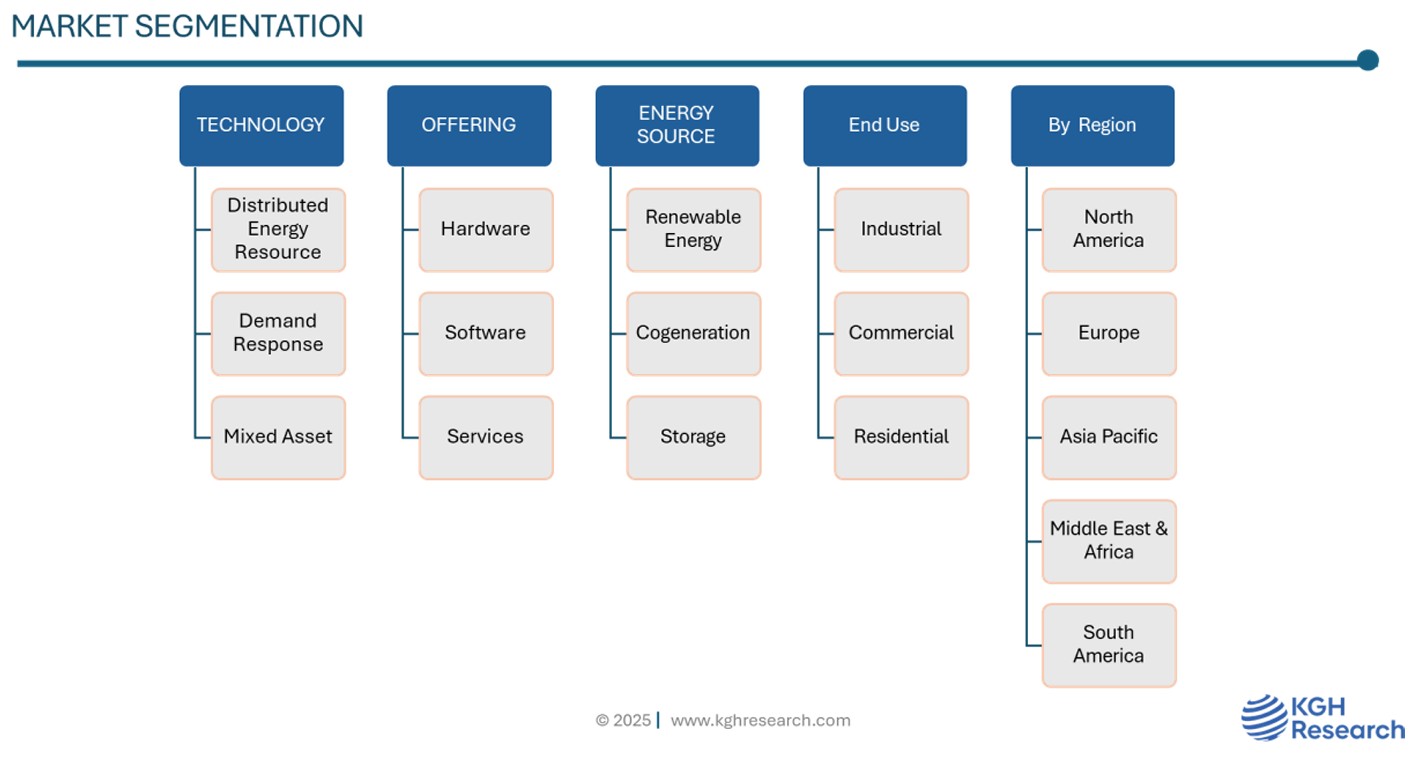
Segments Covered | Technology, Offering, Energy Source, End Use |
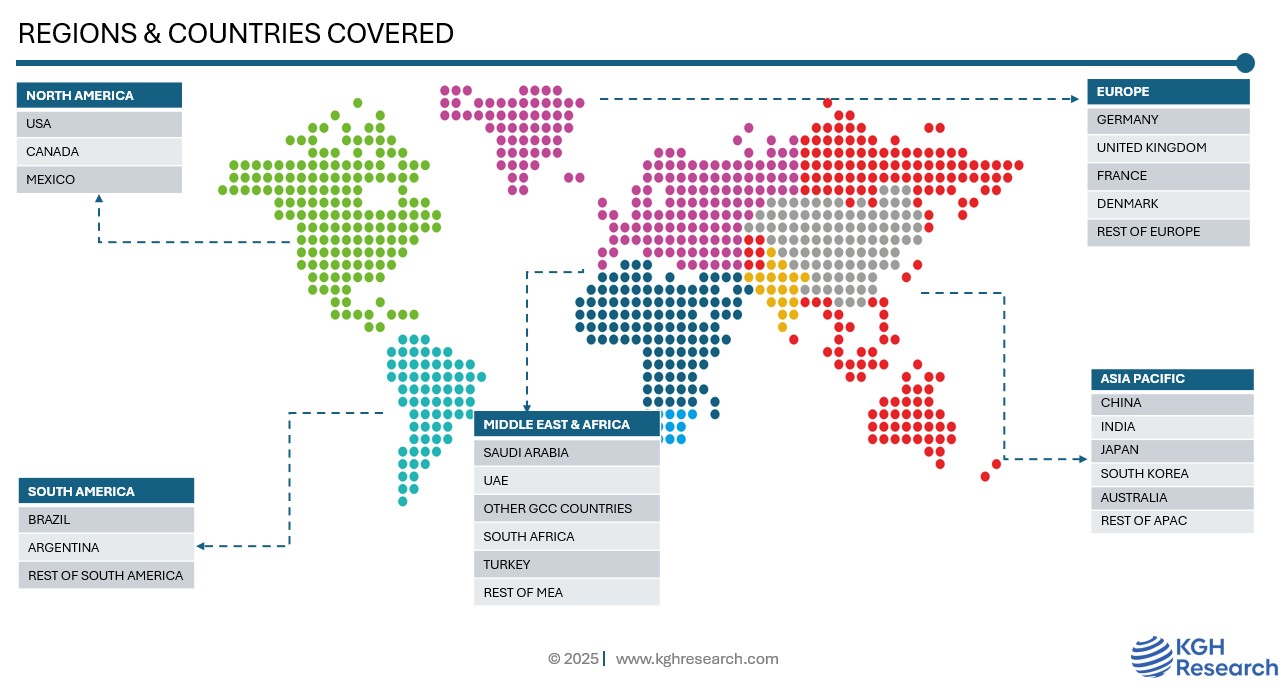
Regions Covered | North America, Europe, Asia Pacific, South America, Middle East & Africa |
Countries Covered | US, Canada, Mexico, UK, Germany, Italy, France, Denmark, China, Japan, South Korea, Australia, UAE, South Africa, Saudi Arabia, Brazil, Argentina |
Companies Profiled | GENERAL ELECTRIC COMPANY, SCHNIDER ELECTRIC, SHELL, SIEMENS, ABB, TESLA, HITACHI, GENERAC POWER, IBM, CPOWER, NEXT KRAFTWERKE GMBH., AUTOGRID SYSTEMS, INC., TOSHIBA CORPORATION, LIMEJUMP LIMITED, FLEXITRICITY, STEM, OLIVINE, SUNVERGE ENERGY, INC. |