
Agriculture Equipment Market (2022 - 2032)
AGRICULTURE EQUIPMENT MARKET SIZE & SHARE BY TYPE (TRACTORS, HARVESTERS, PLOWS, SEEDERS & PLANTERS, TILLERS, SPRAYING EQUIPMENT, IRRIGATION EQUIPMENT), BY AUTONOMOUS (MANUAL MACHINERY, SEMI-AUTOMATE, FULLY AUTONOMOUS), APPLICATION (CROP PRODUCTION, LIVESTOCK FARMING, SOIL CULTIVATION & LAND PREPARATION, IRRIGATION & WATER MANAGEMENT, PEST CONTROL, FERTILIZATION & ARGO PROCESSING), BY END USE AND BY REGION & COUNTRY–FORECAST TO 2032
| Report Code: Agri1102-0201 | Number of Pages: 400 | Report Format: PDF, EXCEL, PPT |
|---|---|---|
|
Trend Year: 2022 – 2024 |
Forecast Period: 2025 – 2032 |
Publish Date: SEPTEMBER 2025 |
- Report Summary
-
Tables of Content
- Segmentation
- Methodology
- User License & Pricing
- Sample Copy
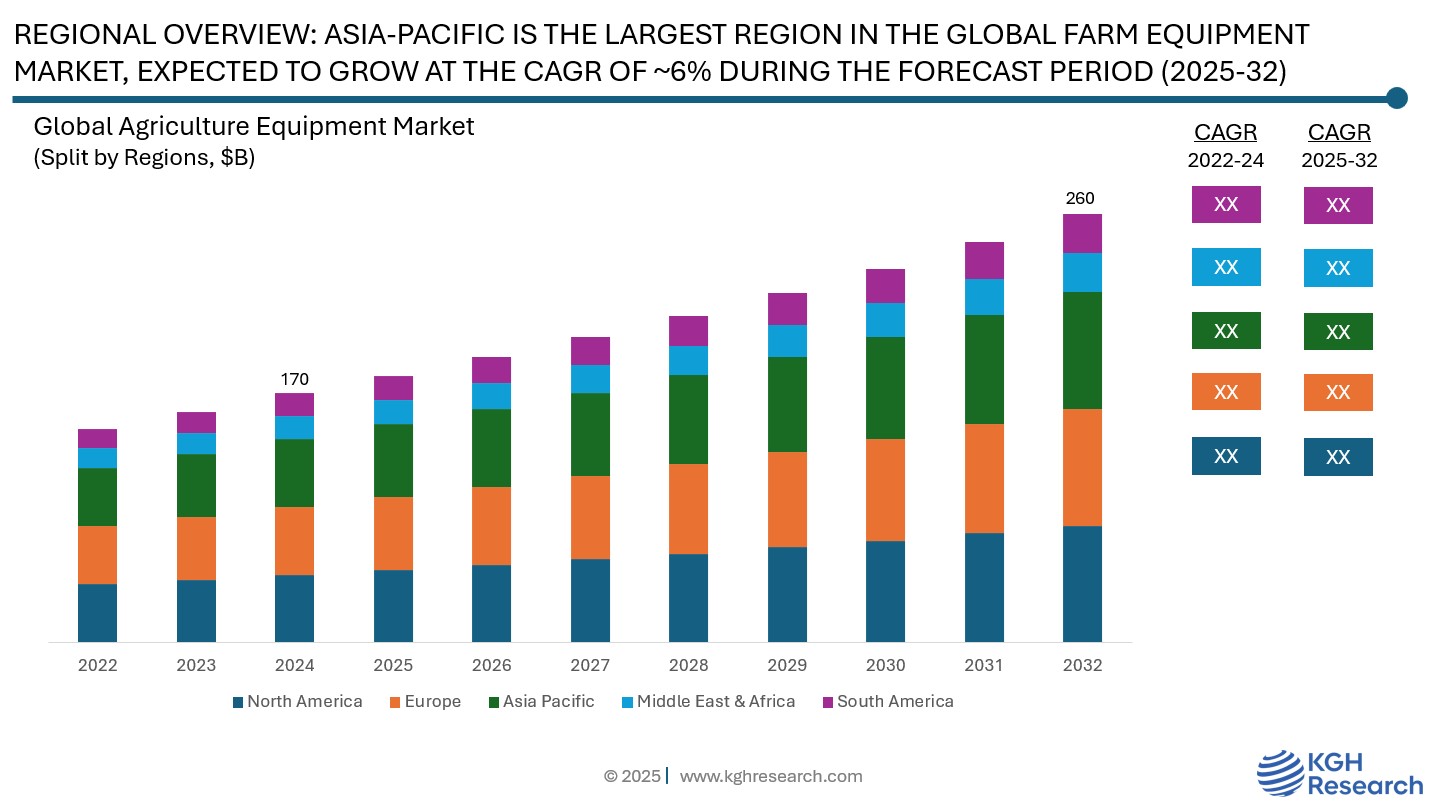
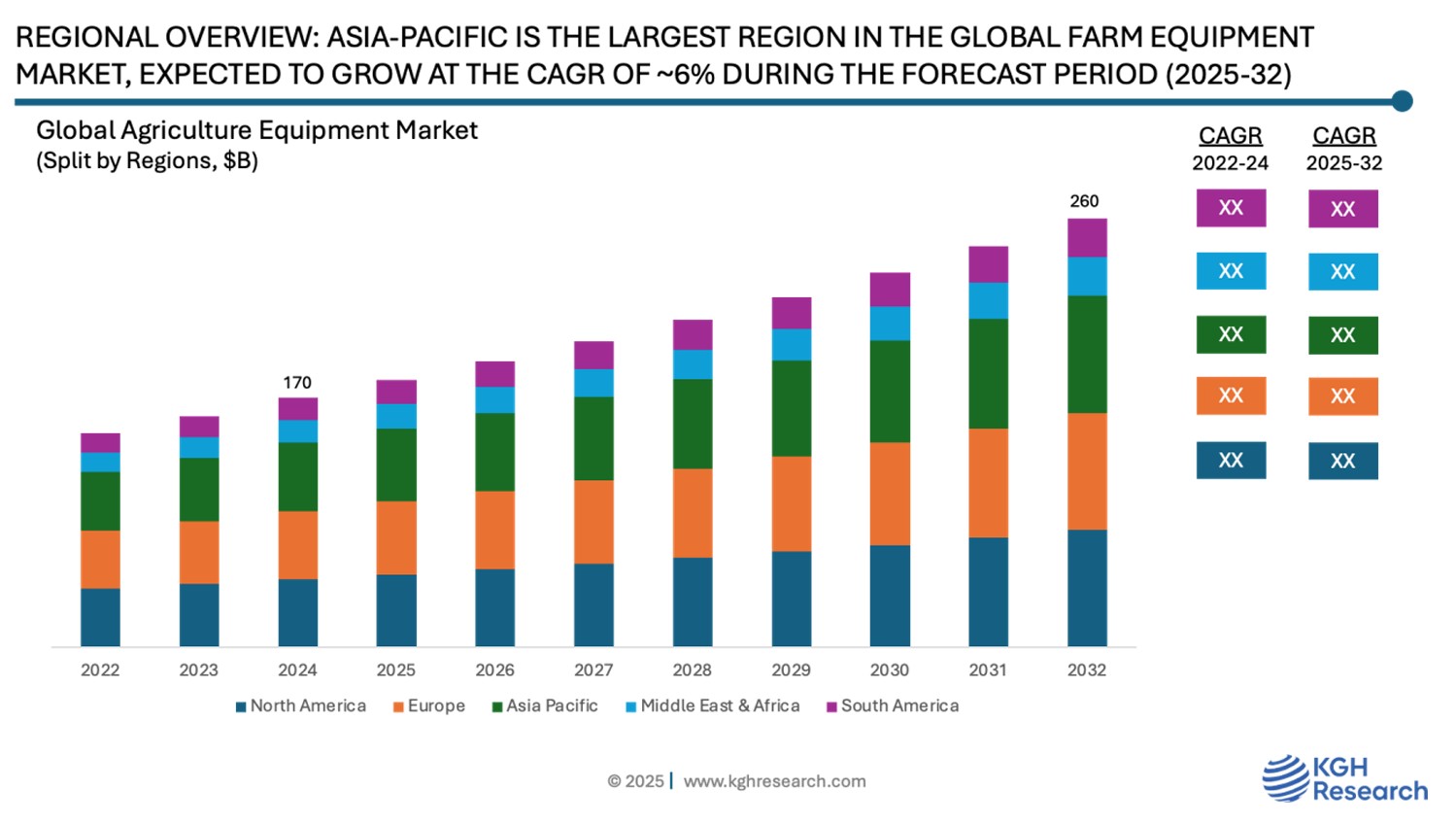
Market overview: The global agriculture equipment market was estimated at US $170 billion in 2024 and is projected to grow at a compound annual growth rate (CAGR) of 5.4% from 2025 to 2032 to reach $260 billion by 2032. The global agriculture equipment market is influenced by several factors that aim to improve productivity, efficiency, and sustainability in farming. One major driver is the rising global population, which increases food demand and makes mechanized farming necessary to boost crop yields. Technological advancements like GPS-enabled tractors, autonomous machines, and precision farming tools are changing traditional farming practices. This shift leads to greater efficiency and less reliance on labor. Government support through subsidies and programs that promote mechanization in agriculture also drives market growth, especially in developing countries. Additionally, concerns about labor shortages, climate change, and the need for sustainable farming practices are prompting farmers to use modern equipment that reduces resource waste and minimizes environmental impact.
MARKET DYNAMIC
GROWTH DRIVERS:
- Rising demand and adoption of precision farming
- Increasing mechanization rate
- Labor shortages in agriculture
- Rapid population growth and rising global food demand
- Integration of GPS, IoT, AI, drones, and automation in equipment enhances productivity
- Supportive policies and subsidies aimed at modernizing agriculture
NEW GROWTH OPPORTUNITIES:
- Expanding agriculture sector in emerging economies
- Integration of IoT and AI
- Opportunity 3
- Opportunity 4
MARKET RESTRAINTS:
- High cost of equipment
- Lack of technical know-how
- Market Restraint 3
- Market Restraint 4
GROWTH HURDLES:
- High maintenance and operational costs
- Lack of rural infrastructure such as reliable electricity, roads, and connectivity
Equipment Type: Market Insights
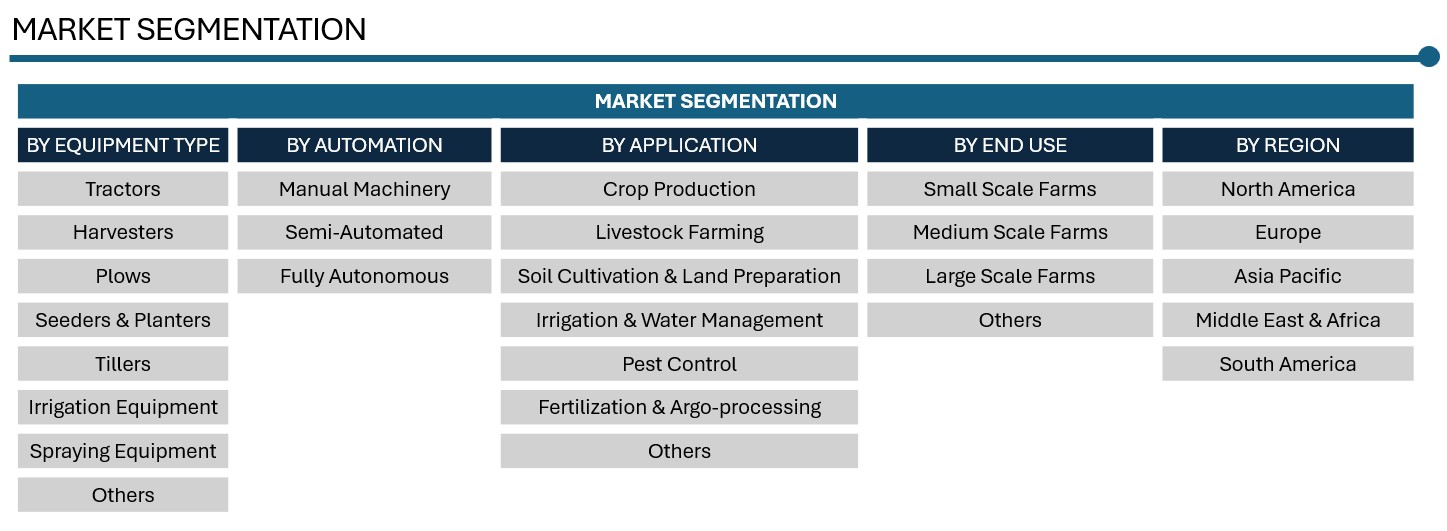
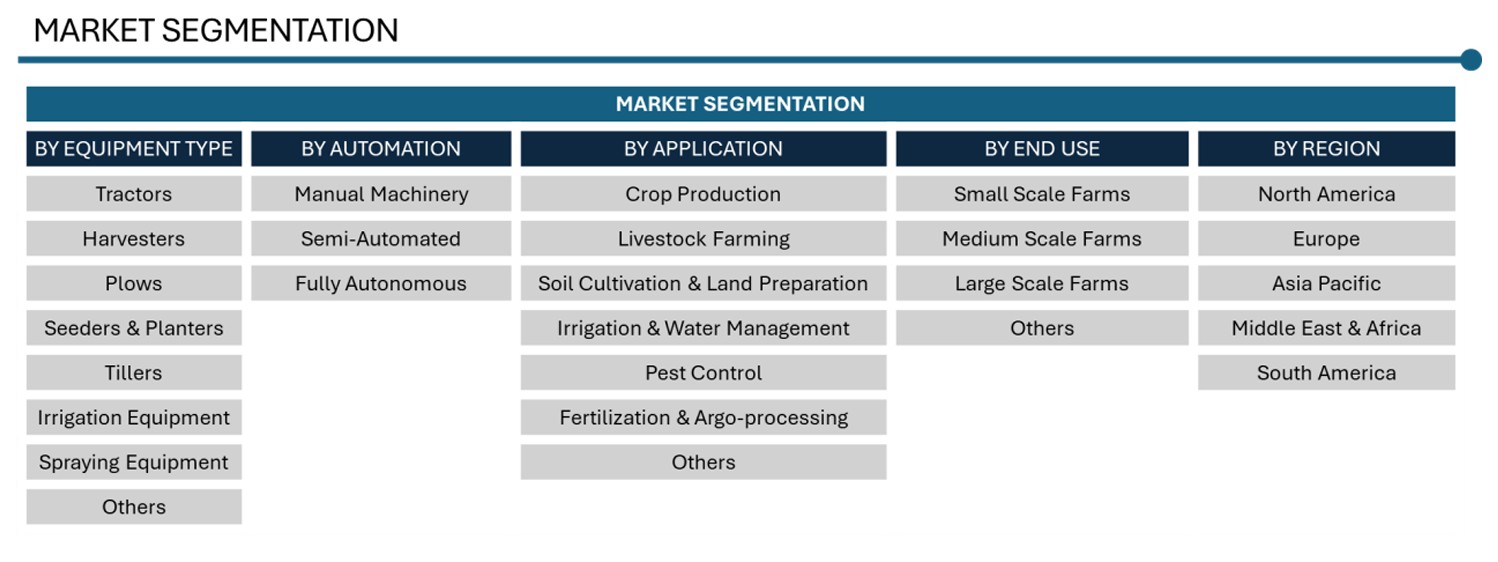
By equipment type, the global agriculture equipment market divides into tractors, harvesters, plough, seeders and planters, tillers, irrigation equipment, spraying equipment, and others. Tractors are essential for modern agriculture. They perform various tasks like ploughing, tilling, and hauling. Harvesters help make the process of gathering crops, such as grains and vegetables, more efficient. This reduces labour costs and boosts productivity. Plows are traditional tools that break and turn the soil before planting. Seeders and planters ensure even seed distribution, which improves crop yield and planting efficiency. Tillers break up compacted soil and prepare the seedbed. Irrigation equipment includes sprinklers, drip systems, and other tools that help distribute water to crops effectively. This is especially important in areas with limited water supply. Spraying equipment applies fertilizers, pesticides, and herbicides evenly across fields to promote plant health and high yields. The other category may include post-harvest equipment, balers, or specialized tools for niche farming activities. Each of these types of equipment is vital for increasing farm productivity, reducing manual labour, and supporting sustainable farming practices.
Automation: Market Insights
By automation, the agriculture equipment market is divided into Manual Machinery, Semi-Automated, and Fully Autonomous equipment. Manual Machinery: These machines rely completely on human effort. They are usually less expensive and are often used in small-scale or traditional farming. Full human control is needed for all operations. Semi-Automated: These machines feature some level of automation, such as GPS, sensors, or AI-assisted controls, but still need a human operator. They help lower labour costs and improve accuracy and efficiency. Fully Autonomous: These machines can perform tasks with little to no human involvement. They use AI, machine learning, and real-time data for jobs like seeding, harvesting, and spraying in large-scale or precision farming.
Application: Market Insights
By application, the agriculture equipment market is divided into the following key areas, Crop Production. This includes equipment for planting, cultivating, and harvesting various crops such as cereals, grains, fruits, and vegetables. Livestock Farming. This category features tools and machines designed for feeding, milking, cleaning, and managing animals like cattle, poultry, and pigs. Soil Cultivation and Land Preparation. This involves equipment like plows, tillers, and harrows, which are used to prepare land for seeding and improve soil conditions. Irrigation and Water Management. This includes systems such as sprinklers and drip irrigation setups that ensure efficient water distribution across farms. Pest Control. This area includes sprayers and related tools that apply pesticides, herbicides, and fungicides to protect crops from pests and diseases. Fertilization and Agro-Processing. This involves equipment for applying fertilizers and processing harvested produce, including mixers, spreaders, and storage systems. These applications show the various roles agricultural equipment plays in the farming value chain.
End Use: Market Insights
The agricultural equipment market, when divided by end use, includes various farm operations that differ in size, ownership, and technology use. Small-scale farms are usually run by individuals or families. They have limited land and lower investment. These farms tend to use affordable, compact, and multifunctional machines to manage daily tasks efficiently without high costs. Medium-scale farms sit between small and large operations, using a combination of manual and semi-automated equipment to improve productivity while being mindful of costs. Large-scale farms, often commercial businesses, cover extensive land and need powerful, fully mechanized solutions. This includes autonomous tractors, GPS-guided harvesters, and precision seeding systems. These farms focus on efficiency, maximizing yield, and saving labor. The “Others” category includes agricultural cooperatives, where farmers share resources and machinery; corporate farms that operate on a large scale and invest heavily in new farming technologies; government agencies that buy equipment for demonstration, subsidies, or development programs; and agri-tech startups that use automation, robotics, IoT, and AI to bring in new and sustainable farming practices. This breakdown shows the wide-ranging need for equipment designed for different operational sizes and ownership types in global agriculture.
Regional: Market Insights
The Asia-Pacific (APAC) region is the largest market for agricultural equipment. This growth comes from several factors, including vast agricultural land, a large rural population, and increased mechanization efforts in developing economies. Countries like China, India, Japan, and those in Southeast Asia have seen significant growth in modern farming machinery adoption. This shift addresses the need to boost productivity and lessen reliance on manual labor. Specifically, India and China, which account for a substantial share of global agricultural output, are moving quickly from traditional farming to mechanized practices. They aim to tackle issues such as labor shortages, rising food demand, and climate change.
Government programs and subsidies have significantly boosted the agricultural machinery market in APAC. For example, initiatives like India’s Sub-Mission on Agricultural Mechanization (SMAM) and China’s farm machinery subsidies support small and marginal farmers in adopting tractors, harvesters, seeders, and irrigation systems. The growth of agribusinesses and contract farming has also increased demand for advanced equipment in the region. APAC benefits from major local manufacturers like Kubota, Mahindra & Mahindra, Yanmar, and TAFE, who provide affordable solutions suited to local farming needs.
Additionally, there is a growing focus on precision agriculture, smart irrigation systems, and automation in countries like Japan and South Korea. This trend shows the region’s shift towards high-tech farming. Consequently, APAC not only leads in equipment sales volume but is also becoming a center for innovation and technology in agriculture, establishing itself as the global leader in the agricultural equipment market.
Competition: Agriculture equipment Market
The agriculture equipment market is very competitive. Key players focus on innovation, product efficiency, and partnerships to strengthen their market position. Major companies include Deere & Company, CNH Industrial, AGCO Corporation, Kubota Corporation, CLAAS GmbH, Mahindra & Mahindra Ltd., Yanmar Co., Ltd., Iseki & Co., Ltd., SDF Group, and Escorts Limited. These companies are continuously investing in research and development to introduce smart, autonomous, and precision farming solutions that cater to the evolving needs of farmers across various regions. Strategic collaborations, mergers and acquisitions, and expansion into emerging markets are also key strategies employed to maintain a competitive edge in the global agriculture equipment industry.
AGRICULTURE EQUIPMENT MARKET SNAPSHOT | |
Market Size In 2025 | USD 170 BILLION |
Market Forecast In 2032 | USD 260 BILLION |
Compound Annual Growth Rate (2025-2032) | 5.4% |
Historical Data (Years) | 2022-2024 |
Forecast Data (Years) | 2025-2032 |
Region Dominance | Asia Pacific |
Country Dominance | China |
Growth Driver | Rising demand and adoption of precision farming, Labor shortages in agriculture, Rapid population growth and rising global food demand, Integration of GPS, IoT, AI, drones, and automation in equipment enhances productivity, Supportive policies and subsidies aimed at modernizing agriculture |
Segments Covered | BY EQUIPMENT TYPE, BY AUTONOMOUS, BY APPLICATION, BY END USE, AND BY REGION & COUNTRIES |
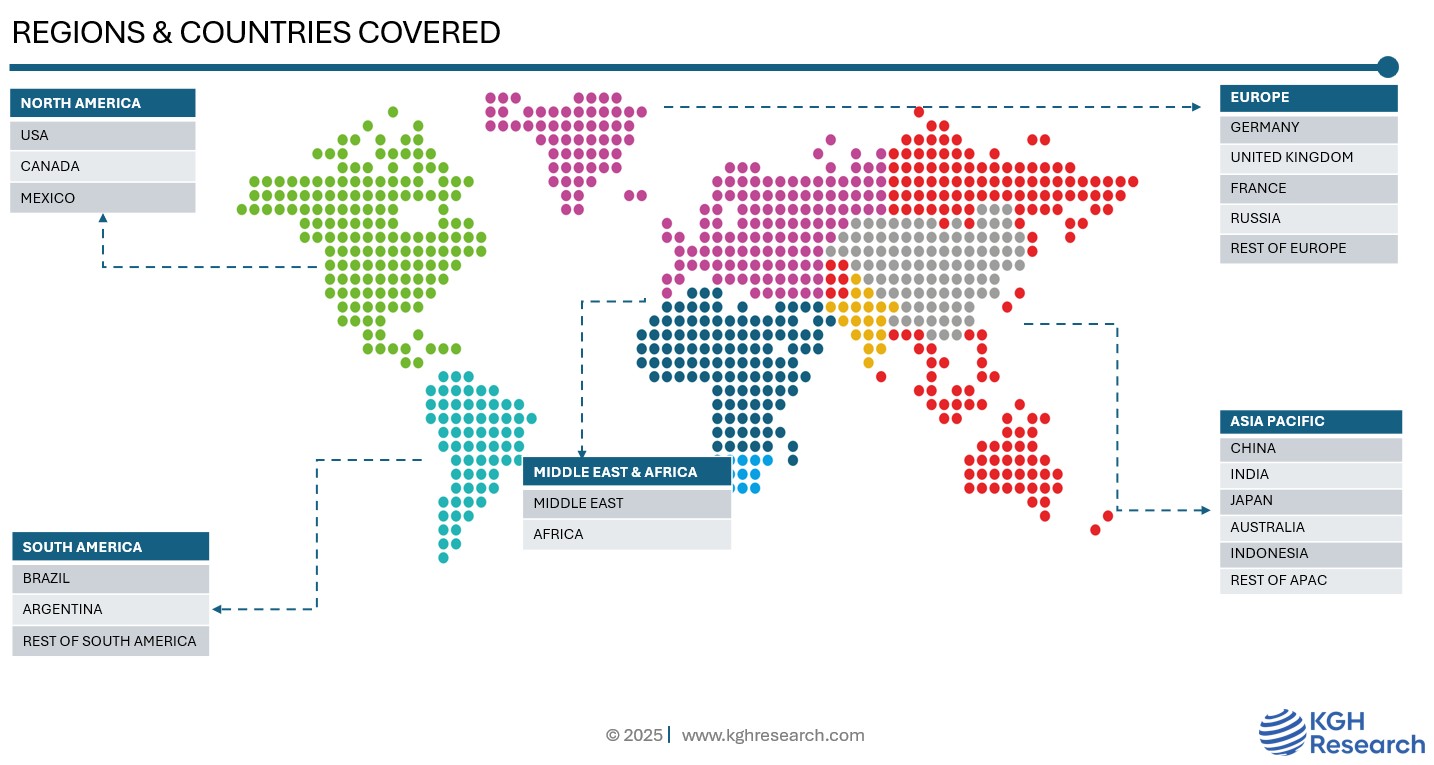
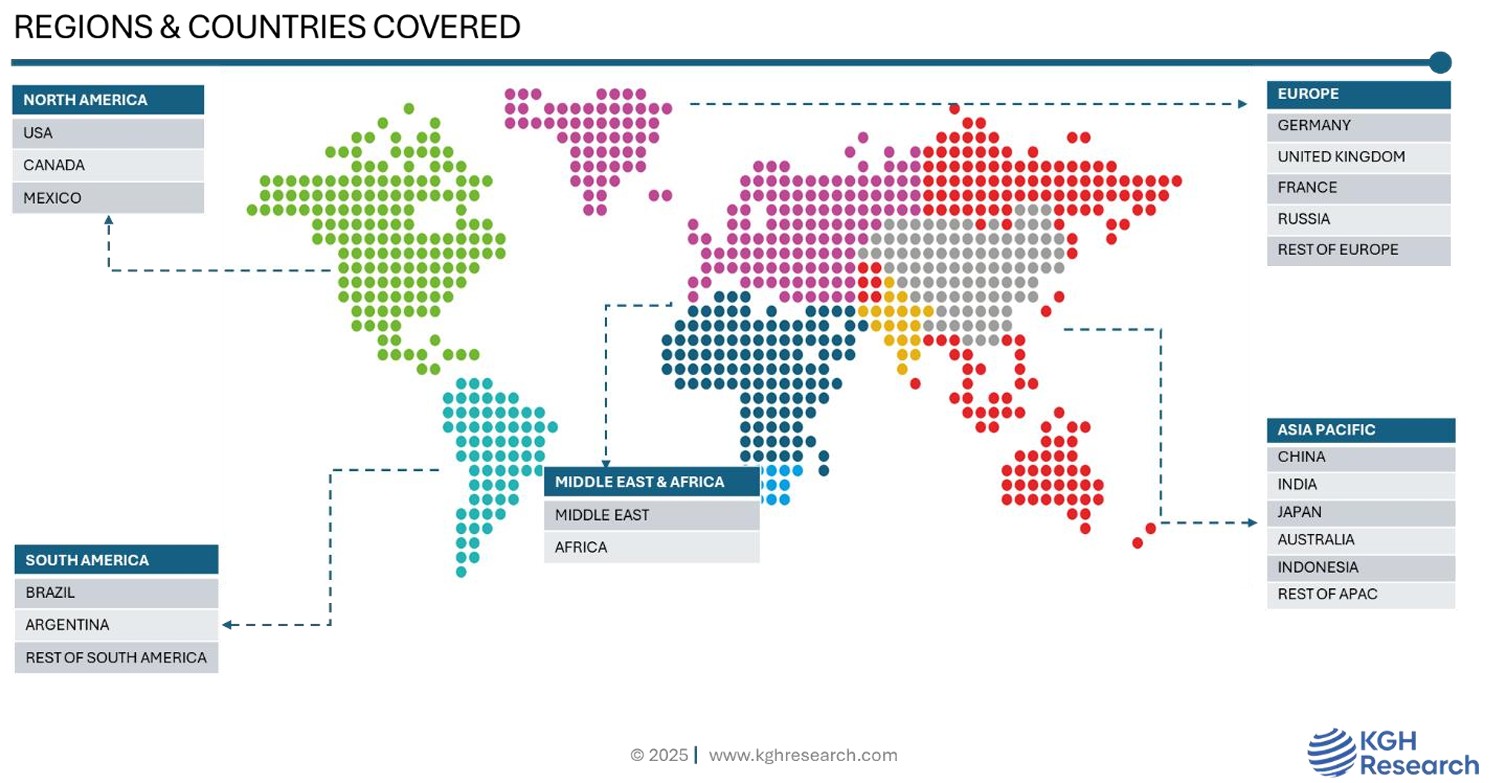
Regions Covered | NORTH AMERICA, EUROPE, ASIA PACIFIC, SOUTH AMERICA, MIDDLE EAST & AFRICA |
Countries Covered | USA, CANADA, MEXICO, UK, GERMANY, FRANCE, RUSSIA, REST OF THE EUROPE, CHINA, INDIA, JAPAN, AUSTRALIA, INDONESIA, REST OF APAC, BRAZIL, ARGENTINA, REST OF THE WORLD |
Companies Profiled (30+) | JOHN DEERE, CNH INDUSTRIAL, AGCO CORPORATION, KUBOTA CORPORATION, MAHINDRA & MAHINDRA LTD., CLAAS, SDF GROUP, JCB, YANMAR CO., LTD, ISEKI & CO., LTD, TAFE, ZOOMLION, LOVOL HEAVY INDUSTRY., MANY MORE. |