
At KGH Research,
We track all the key megatrends shaping the respective industry & its impact on client’s business.
Why Generator Farms Are Expanding Inside US Hyperscale Data Centers
Introduction
The rapid rise of artificial intelligence (AI), cloud computing, and high-performance workloads is transforming the global data center industry. Nowhere is this shift more visible than in the United States, home to the world’s largest hyperscale data centers.
These facilities support digital services used by billions — from search engines and streaming platforms to enterprise SaaS and generative AI models. But behind this digital ecosystem lies a critical constraint: reliable electricity.
To ensure uninterrupted operations, hyperscale operators are massively expanding data center generator farms — large clusters of backup generators capable of powering entire campuses during grid failures.
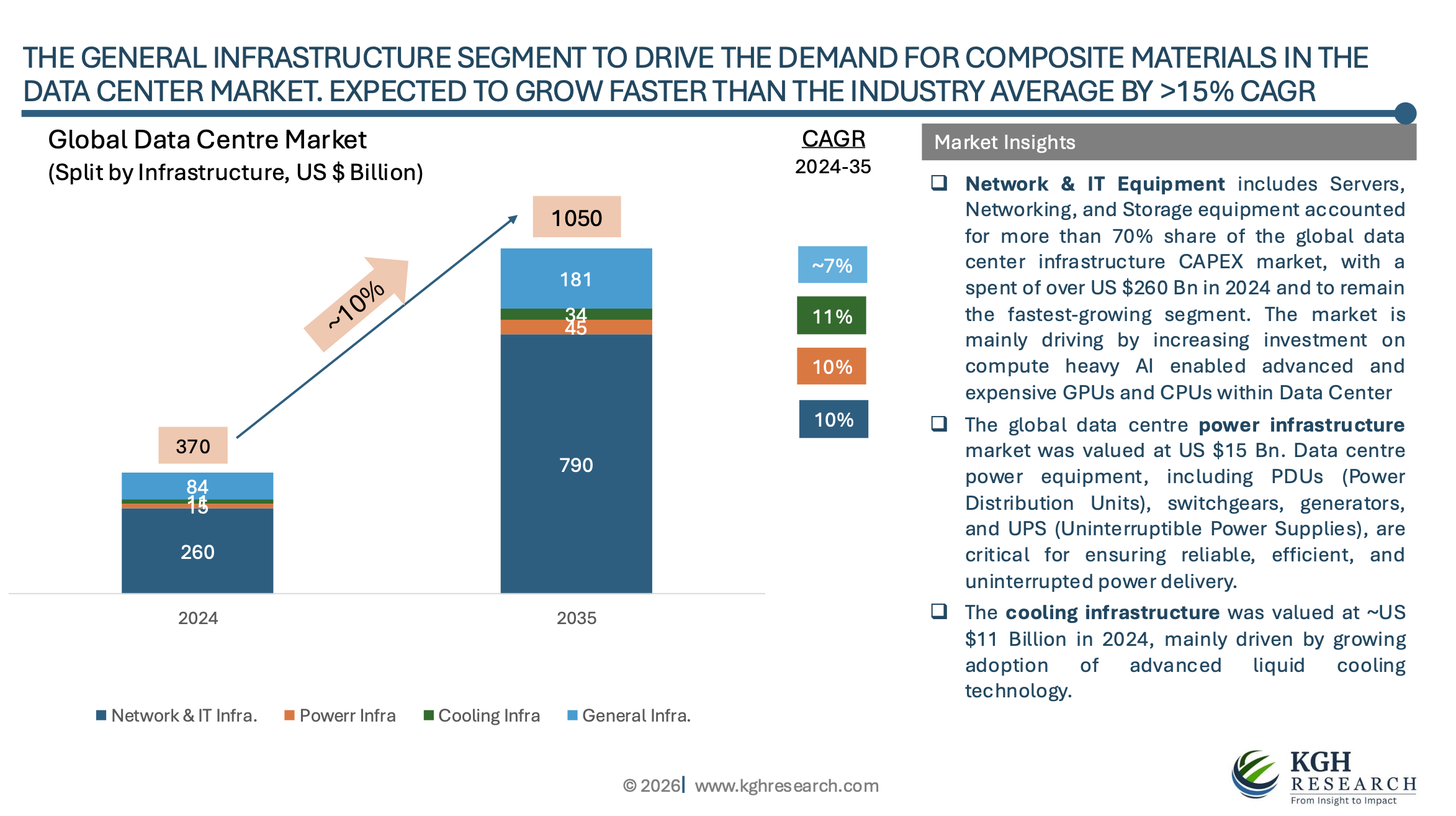
Massive Power Demand From AI Data Centers
Modern AI data centers consume dramatically more power than traditional facilities.
Key drivers of rising energy demand:
- GPU-dense servers for AI training and inference
- High-performance computing (HPC) clusters
- Ultra-high rack densities
- Continuous 24/7 processing workloads
- Advanced cooling systems (including liquid cooling)
Large hyperscale campuses often require hundreds of megawatts of electricity — comparable to small cities. This makes data center power reliability a mission-critical priority.
What Is a Generator Farm in a Data Center?
A generator farm is a large installation of backup generators deployed across a campus to provide emergency power at scale.
Unlike traditional enterprise setups with a few standby units, hyperscale facilities may deploy:
- Dozens of high-capacity generators per site
- Modular layouts for phased expansion
- Integration with UPS and battery systems
- Automated failover capabilities
- Full-load support during prolonged outages
These systems ensure uninterrupted operations for major cloud providers such as Amazon Web Services (AWS), Microsoft Azure, and Google Cloud.
Why Backup Generators Are Becoming Mission-Critical
sWHistorically, generators served as emergency backups used only occasionally. Today, they are integral to hyperscale power architecture.
Reasons for their growing importance:
1. Zero-Downtime Requirements
Downtime in hyperscale environments can cost millions per hour and disrupt global services.
2. Grid Constraints and Instability
Power grids in many regions face capacity limits due to electrification and renewable transitions.
3. AI Workload Sensitivity
AI training jobs can run for weeks — sudden interruptions risk data corruption and costly delays.
4. Regulatory and Service-Level Agreements (SLAs)
Enterprise customers demand guaranteed uptime from cloud providers.
Redundancy Architectures: N+1 vs. 2N Explained
Reliability in mission-critical facilities depends on redundancy design.
N+1 Redundancy
- Provides one extra backup component beyond required capacity
- Protects against single equipment failure
- Common in Tier III data centers
2N Redundancy
- Fully duplicated independent power systems
- Supports concurrent maintenance without downtime
- Typical of Tier IV hyperscale facilities
These architectures ensure continuous operation even during equipment failure, maintenance, or grid outages.
Conclusion:
The expansion of generator farms inside US hyperscale campuses reflects a structural shift in digital infrastructure. AI workloads, cloud computing, and real-time services require uninterrupted power at unprecedented scale.
Backup generators — once peripheral — are now central to ensuring uptime, protecting investments, and maintaining global digital operations.
As new AI data centers emerge worldwide, the demand for robust, scalable power solutions will only intensify.
Frequently Asked Questions
1. Why are generators important for data centers?
They provide backup power to prevent downtime.
2. Which regions are growing fastest?
North America, Asia-Pacific, and the Middle East.
3. Why does North America lead?
Due to hyperscale giants like Amazon, Microsoft, and Google.
4. What drives Asia-Pacific demand?
Rapid digital growth and cloud adoption in India, China, and Singapore.
5. Why is the Middle East growing?
Government-led AI investments in United Arab Emirates and Saudi Arabia.
6. How does AI impact power needs?
It increases energy demand and need for reliable backup.
7. Will demand keep rising?
Yes, especially in key high-growth regions.