
Artificial intelligence workloads need a lot of computing power. Training AI models uses thousands of processors at the same time, which greatly raises energy consumption and leads operators to redesign data center infrastructure with better power and cooling options.
At KGH Research,
We track all the key megatrends shaping the respective industry & its impact on client’s business.
Data Center Infrastructure Explained: Power, Cooling and Servers
Introduction
Modern digital services rely on strong and dependable computing infrastructure. Every cloud platform, streaming service, financial application, and artificial intelligence system operates inside facilities specifically built to store, process, and distribute large amounts of data. These facilities depend on complex data center infrastructure that makes sure systems work efficiently and without interruption.
A data center is not just a room filled with computers. It is a carefully designed environment where servers, networking systems, power supplies, and cooling technologies work together to keep operations stable. As the demand for artificial intelligence and high-performance computing rises, this infrastructure is becoming more complex and energy-intensive.
Servers: The Core of Data Processing
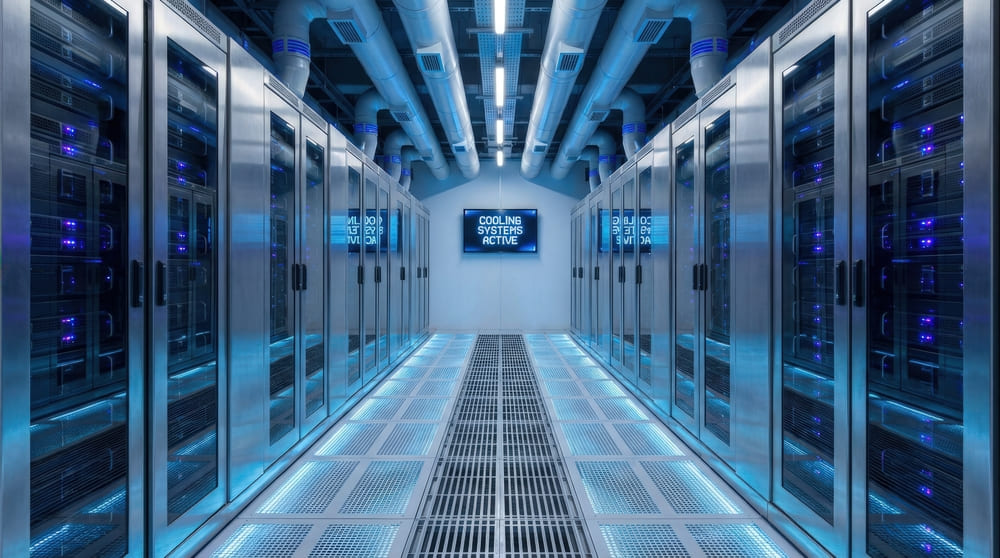
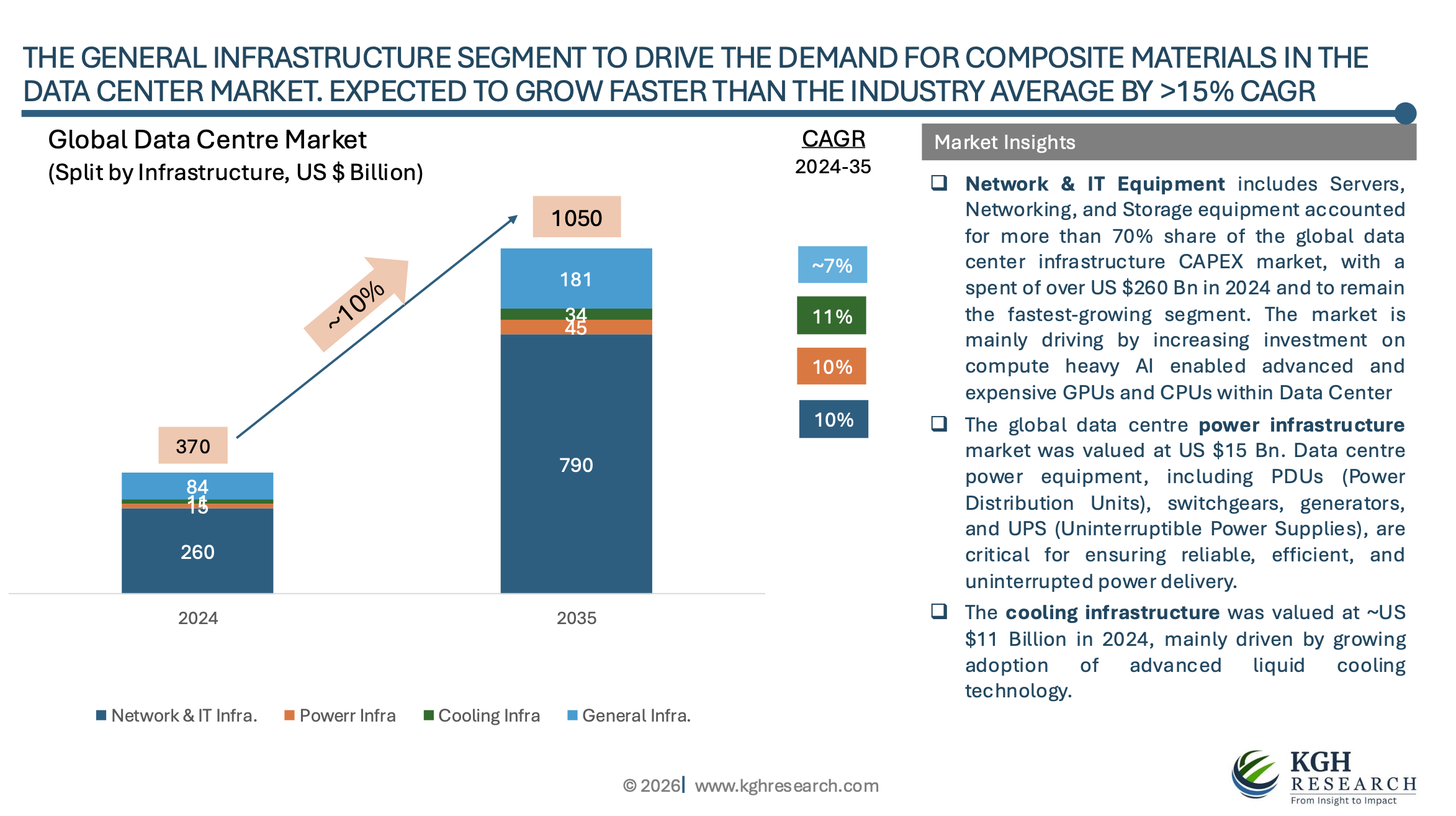
Servers are the backbone of any data center. These powerful computers store data, run applications, and handle digital workloads for businesses and users worldwide.
Unlike personal computers, servers are built for continuous operation and high performance. They are usually arranged in racks, allowing hundreds or even thousands of machines to function within a single facility.
As demand for cloud services, streaming platforms, and AI computing grows, the number of servers in modern data center infrastructure keeps increasing.
Networking: Connecting the Digital Ecosystem
Networking systems enable servers within a data center to communicate with each other and with users over the internet. High-speed switches, routers, and fiber-optic connections create pathways that send data quickly and securely.
Efficient networking infrastructure is vital for large-scale computing operations. It ensures low latency, fast data transfer, and reliable connectivity between cloud platforms, enterprise systems, and global internet traffic.
Power Systems: Ensuring Continuous Operations
Power supply is a crucial part of any data center. Digital services must remain operational 24 hours a day, meaning facilities need reliable and uninterrupted electricity.
Modern data center power systems include several layers of backup to prevent downtime. These typically involve backup generators, uninterruptible power supplies (UPS), and advanced electrical distribution networks.
With the rise of high-performance computing and AI workloads, power density in data centers is increasing quickly. This is forcing operators to update their electrical infrastructure to meet the growing energy demand.
Cooling Systems: Managing Heat from High-Performance Hardware
Servers produce a lot of heat when processing data. Without proper cooling, hardware can overheat and fail, leading to service interruptions.
To keep stable operating conditions, facilities rely on advanced data center cooling systems that regulate temperature and airflow across server racks. While traditional air-cooling systems are still popular, modern high-density environments increasingly need more sophisticated solutions.
These can include liquid cooling technologies, immersion cooling systems, or hybrid methods designed to manage the heat generated by high-performance processors.
Conclusion:
A modern data center is a complex system where servers, networking systems, power infrastructure, and cooling technologies work in unison to keep digital services running smoothly. Each component plays a vital role in ensuring reliability, efficiency, and scalability.
As artificial intelligence continues to grow, the need for better data center infrastructure will only rise. Higher computing requirements are pushing innovations in data center power systems and data center cooling systems, changing how digital infrastructure is designed around the world.
Infrastructure opportunities are detailed in the GCC Data Center Market Study
Frequently Asked Questions
1. What is data center infrastructure?
Data center infrastructure includes the essential parts that allow a data center to work effectively. This consists of servers, networking equipment, power supply systems, and cooling technologies that support ongoing digital operations.
2. Why are power systems important in a data center?
Reliable data center power systems ensure that servers and networking equipment operate without interruption. Backup generators, UPS systems, and extra electrical networks help avoid downtime and keep services running smoothly.
3. How do data center cooling systems work?
Data center cooling systems control the temperature inside facilities to stop servers from overheating. They use methods like air cooling, liquid cooling, and effective airflow management to maintain stable operating conditions.
4. Why is AI increasing power demand in data centers?
5. What role do servers play in a data center?
Servers process data, run applications, and store information, making them the core computing component of any data center.
6. Why is networking important in data centers?
Networking connects servers and enables fast, secure data transfer between systems and users across the internet.
7. How is AI changing data center infrastructure design?
AI is driving the need for higher power capacity, advanced cooling solutions, and more efficient data center infrastructure.