
Digital Twin Market (2022 - 2032)

DIGITAL TWIN MARKET SIZE & SHARE BY APPLICATION (PREDICTIVE MAINTENANCE, BUSINESS OPTIMIZATION, PERFORMANCE MONITORING, INVENTORY MANAGEMENT, PRODUCT DESIGN & DEVELOPMENT), BY ENETRPRISE SIZE (LARGE ENTERPRISES, SME), BY TYPE (PARTS, PRODUCT, PROCESS, SYSTEM), BY DEPLOYMENT (CLOUD, ON-PREMISES), BY MODEL (PLATFORM AS A SERVICE, SOFTWARE AS A SERVICE) BY END USE (AUTOMOTIVE, HEALTHCARE, ENERGY & UTILITIES, AEROSPACE, TELECOM, OIL & GAS, INFRASTRUCTURE, RETAIL, AGRICULTURE) BY REGION & COUNTRY – FORECAST TO 2032
| Report Code: S&E6002-0401 | Number of Pages: 400 | Report Format: PDF, EXCEL, PPT |
|---|---|---|
|
Trend Year: 2022 – 2024 |
Forecast Period: 2025 – 2032 |
Publish Date: SEPTEMBER 2025 |
- Report Summary
-
Tables of Content
- Segmentation
- Methodology
- User License & Pricing
- Sample Copy
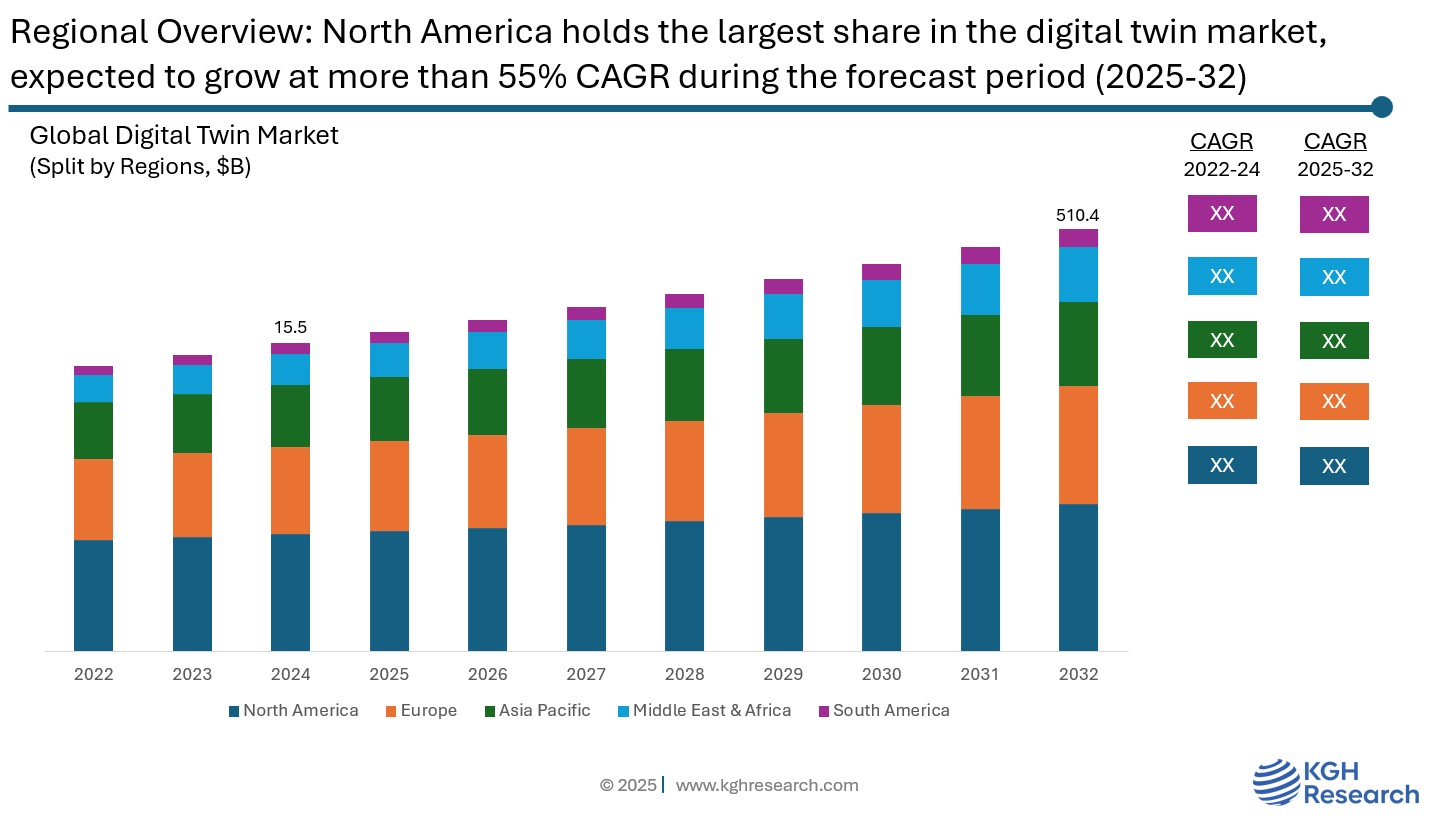
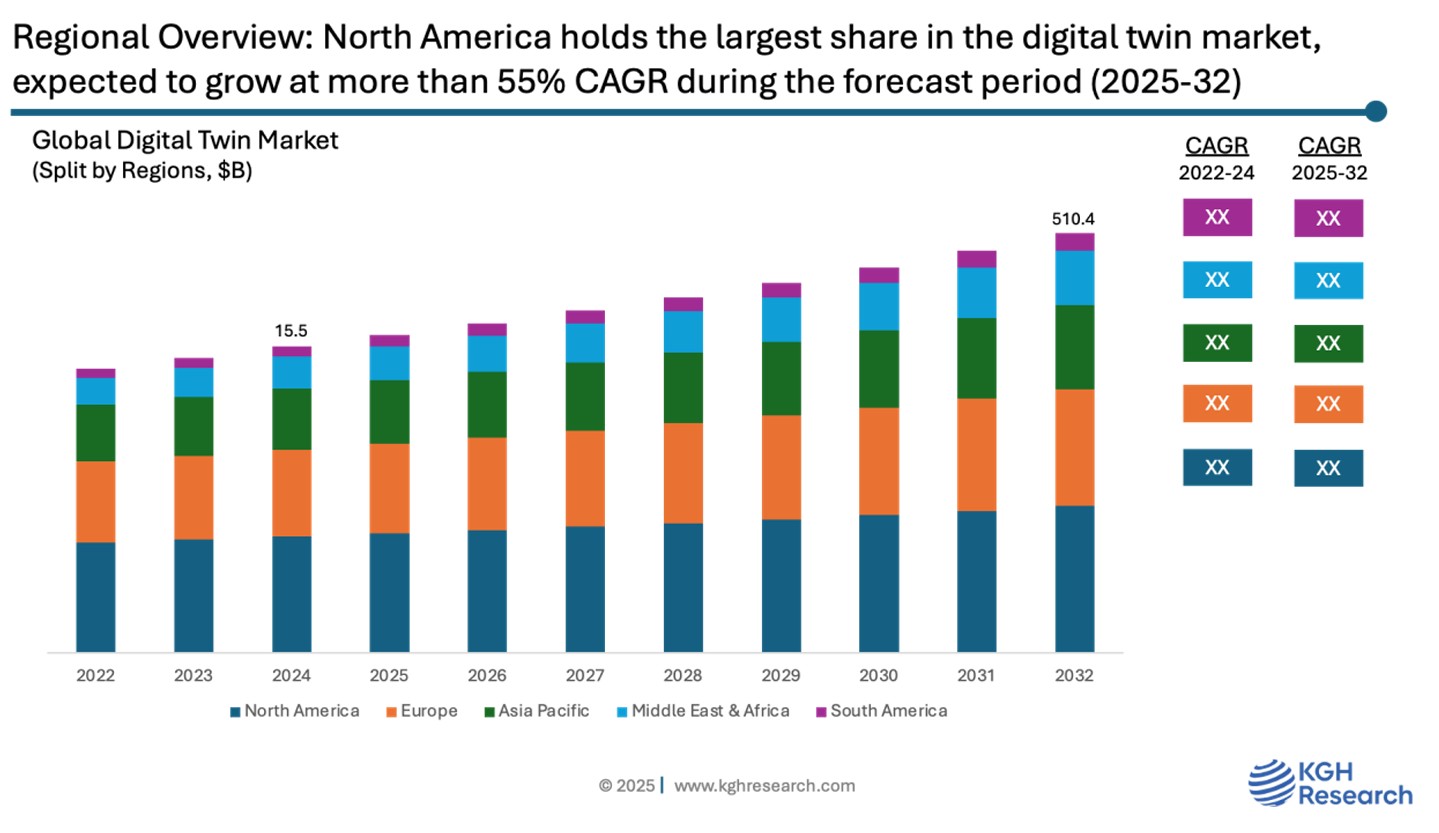
Market Overview: The global digital twin market was valued at approximately USD 15.5 billion in 2024 and is projected to grow at a compound annual growth rate (CAGR) of 54.8% from 2025 to 2032. The market is primarily driven by the increasing adoption of IOT, and industrial IOT, which enable real-time data exchange and seamless connectivity between physical and virtual systems. The growing demand for predictive maintenance is another significant factor, as digital twins help organizations anticipate equipment failures, reduce downtime, and optimize maintenance schedules. Additionally, the global push toward Industry 4.0 and smart manufacturing has accelerated the deployment of digital twins for process automation, operational efficiency, and simulation.
MARKET DYNAMIC
GROWTH DRIVERS:
- The widespread adoption of Industry 4.0 initiatives, especially in manufacturing sector
- Advancements in AI and Machine Learning
- Growing demand for predictive maintenance
- Businesses across various sectors are prioritizing digital transformation
NEW GROWTH OPPORTUNITIES:
- Hospitals and pharma companies increasingly investing in virtual models for operations and personalized care
- Growing smart infrastructure & utilities
MARKET RESTRAINTS:
- High upfront costs & integration complexity
- Data privacy & cybersecurity concerns
- Lack of interoperability standards
- Skilled talent shortage
GROWTH HURDLES:
- Supply chain disruption & geopolitical volatility
- Cyber-attacks & data breaches
- Economic slowdowns / geopolitical strain
Product & Services: Market Insights
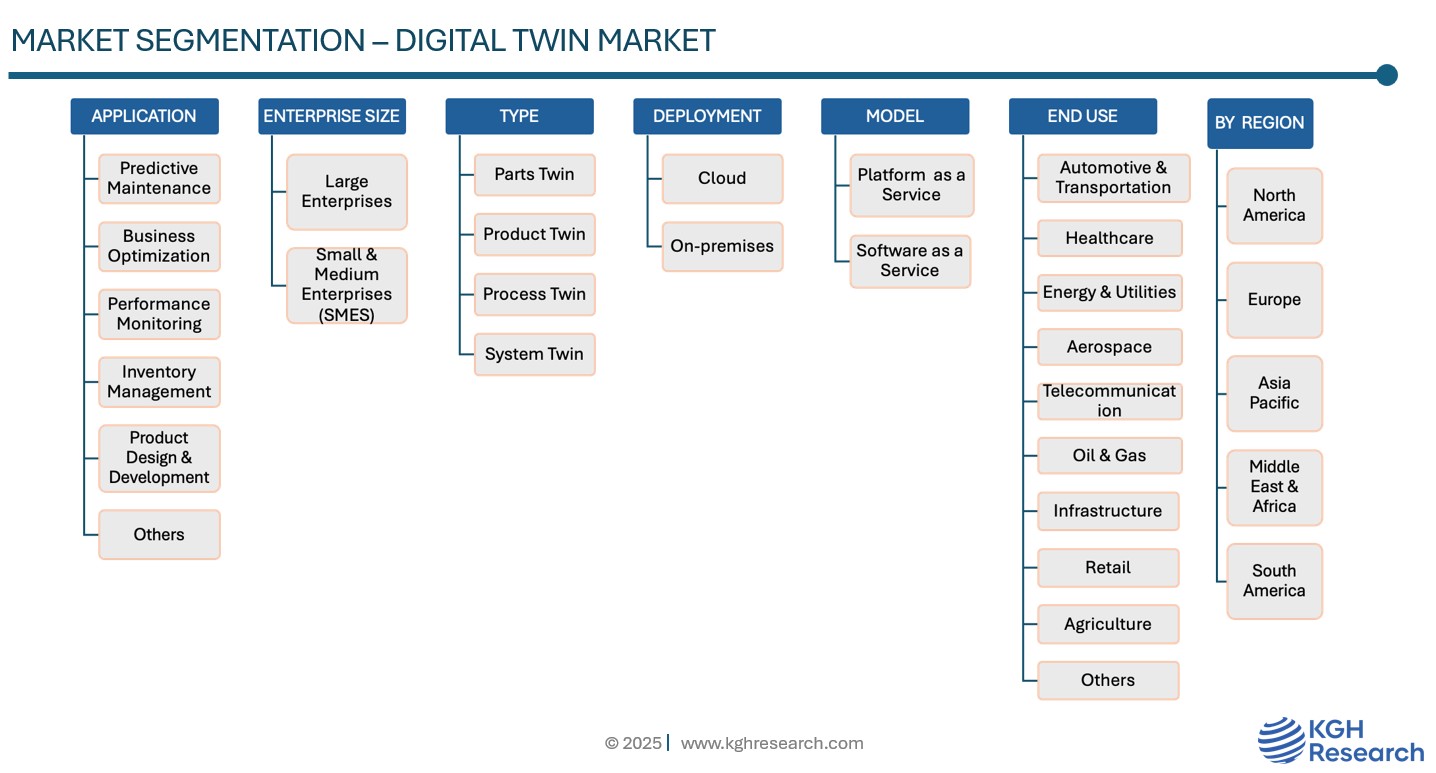
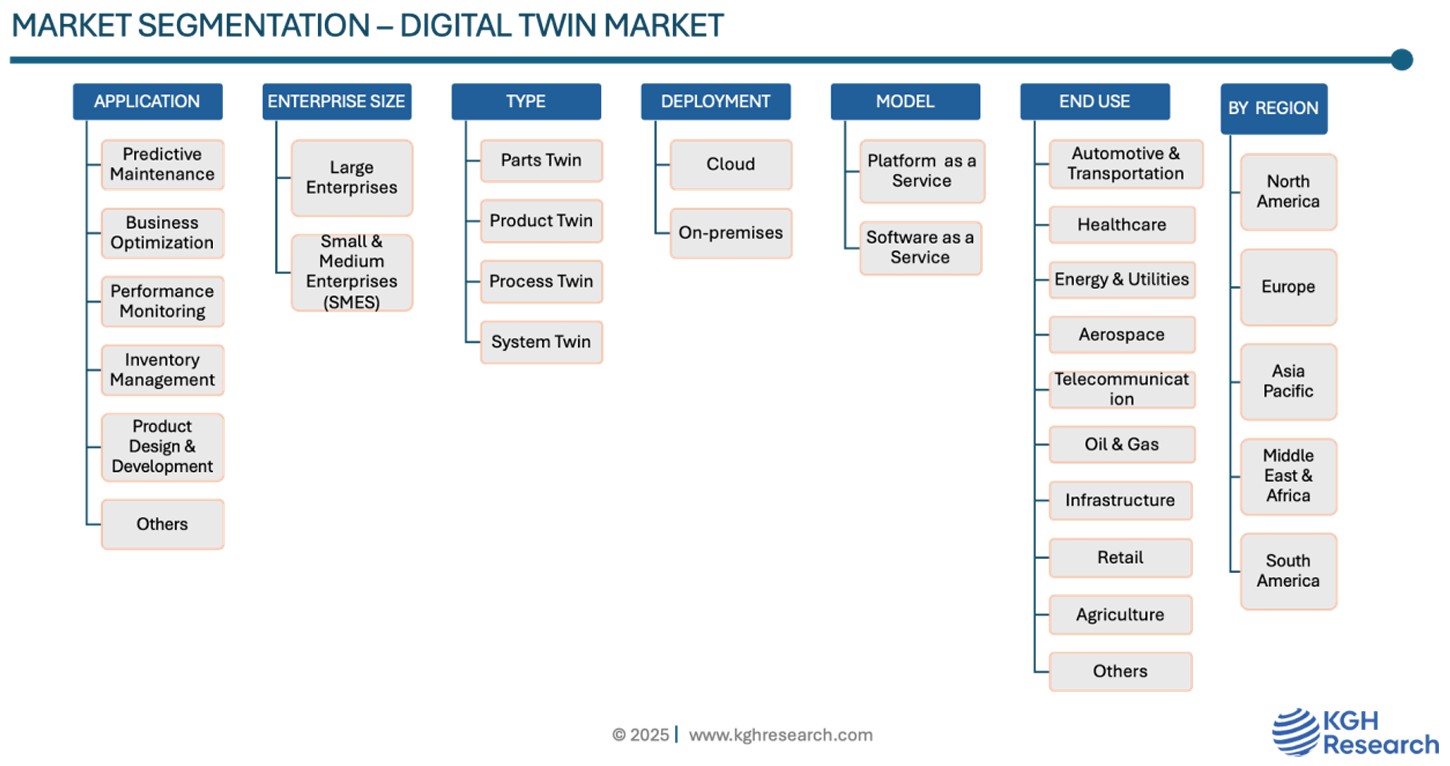
By application, the global digital twin market is segmented into Predictive Maintenance, Business Optimization, Performance Monitoring, Inventory Management, Product Design & Development, and Others. Predictive Maintenance is a key application, enabling organizations specially in manufacturing, utilities & energy, aerospace, and others to monitor equipment in real time, anticipating failures, and reduce unplanned downtime. Business Optimization leverages digital twins to simulate processes and enhance decision-making, boosting efficiency across operations. Performance Monitoring allows continuous tracking of systems like smart grids or industrial machinery to ensure they operate at peak performance. In Inventory Management, digital twins offer real-time visibility and forecasting capabilities that streamline logistics and supply chain operations. Product Design & Development benefits from digital replicas that simulate and test products virtually, cutting down on physical prototyping costs and accelerating innovation.
Enterprise size: Market Insights
By enterprise size, the global digital twin market is divided into Large Enterprises and Small & Medium Enterprises (SMEs). Large enterprises dominate the market due to their substantial budgets, advanced infrastructure, and greater capacity to invest in emerging technologies like digital twins for complex operations, predictive maintenance, and business optimization. However, SMEs are increasingly adopting digital twin solutions, driven by the growing availability of cost-effective, cloud-based platforms and the need to improve operational efficiency, reduce downtime, and remain competitive. Vendors are now tailoring scalable and flexible digital twin offerings to suit the needs and budgets of SMEs, further accelerating adoption across both segments.
Type: Market Insights
By type, the global digital twin market is segmented into Parts Twin, Product Twin, Process Twin, and System Twin. A Parts Twin represents the digital replica of a single component or part, often used in maintenance and defect detection to ensure the reliability of individual assets. Product Twin involves the digital model of a complete product, allowing manufacturers to simulate its performance, validate design, and make improvements before physical production. Process Twin focuses on replicating and optimizing specific industrial or business processes such as manufacturing lines or supply chains to enhance efficiency, reduce waste, and support real-time decision-making. System Twin segment represents an integrated digital replica of a complete system or environment, such as a factory, aircraft, or power plant, enabling comprehensive analysis, coordination across components, and end-to-end monitoring and control. Each type plays a critical role across different stages of asset lifecycle management and digital transformation initiatives.
End Use: Market Insights
By end-use industry, the global digital twin market is divided into Automotive and Transportation, Healthcare, Energy and Utilities, Aerospace, Telecommunication, Oil and Gas, Infrastructure, Retail, Agriculture, and Others. The Automotive and Transportation sector is one of the main users, applying digital twins for vehicle design, performance simulation, and predictive maintenance. In Healthcare, digital twins are becoming popular for personalized treatment planning, hospital operations, and medical device development. The Energy and Utilities segment uses digital twins for asset management, grid optimization, and integrating renewable sources into current networks. Aerospace companies apply them for aircraft design, simulation, and real-time monitoring of complex systems. In Telecommunication, digital twins help with network optimization and predictive analytics for service performance.
Regional: Market Insights
North America is the largest market for digital twin technology. This growth comes from rapid technological adoption, a strong industrial base, and significant investments in digital transformation across various sectors. The United States leads the region because it has major tech providers, advanced manufacturing plants, and companies focused on innovation. Key sectors like automotive, aerospace, energy, and healthcare in North America have quickly adopted digital twin solutions to improve predictive maintenance, product development, and operational efficiency. The region also has a strong ecosystem of IoT, AI, cloud computing, and data analytics, which are essential for deploying digital twins. Additionally, government programs supporting smart infrastructure and rising demand for remote monitoring and real-time simulation help boost market growth. The healthcare sector, particularly in the USA, is increasingly using digital twins for personalized medicine and managing hospitals. Meanwhile, the energy and utilities sector is applying them to modernize grids and incorporate renewable sources. Overall, North America’s focus on innovation, strong research and development capabilities, and early embrace of Industry 4.0 principles put it at the forefront of the global digital twin market.
Competition: Digital twin
The Digital Twin market is highly competitive, with key players focusing on innovation, product efficiency, and strategic partnerships to strengthen their market position. Major companies include Microsoft, General Electric, Siemens, IBM, SAB, ABB, PTC, Bosch. These players are investing in R&D to develop digital twin tailored for automotive, aerospace, agriculture, energy & utilities, oil & gas, telecommunication, healthcare and other applications, driving ongoing competition and technological advancement in the market.
Microsoft, General Electric, Siemens, IBM, SAB, ABB, PTC, Bosch are among the leading companies active in the market.
Microsoft is recognized as one of the top players in the global digital twin market, mainly through its Azure Digital Twins platform. This enterprise solution allows organizations to create detailed digital replicas of real-world environments, which can include buildings, factories, and even entire cities, using a modeling language called Digital Twins Definition Language (DTDL). Azure Digital Twins integrates smoothly with Microsoft’s wider cloud ecosystem, including Azure IoT, AI, analytics, and data services. It offers real-time monitoring, simulation, and predictive analytics. The platform has seen broad adoption in many industries, with significant collaborations such as Johnson Controls for smart building management, Bentley Systems for infrastructure and city planning, and Ansys for integrating simulation-driven digital twins. As a founding member of the Digital Twins Consortium, Microsoft also plays a crucial role in setting industry standards. With ongoing improvements in spatial intelligence, AI integration, and platform compatibility, Microsoft’s Azure Digital Twins remains a preferred option for enterprises looking for scalable and smart digital twin solutions in sectors like healthcare, energy, real estate, and manufacturing.
Siemens AG is a global technology leader and one of the key players in the digital twin market. The company uses its strong engineering skills and industrial software to excel in this field. With the Xcelerator platform, Siemens provides a mix of hardware, software, and digital services, allowing for the creation and use of digital twins in different industries. A key part of this offering is Simcenter, a tool driven by simulation that supports real-time modeling, performance prediction, and design optimization throughout the product lifecycle. Siemens also incorporates digital twins into its SINUMERIK ONE CNC systems for virtual commissioning and into MindSphere, its industrial IoT platform that links physical assets to cloud-based analytics. The company has grown its capabilities through strategic partnerships, including a significant collaboration with NVIDIA to develop immersive industrial metaverse solutions, and it made a major acquisition of Altair Engineering to improve its simulation and physics-based modeling tools. Siemens has a strong market share in digital twin solutions, especially in areas like manufacturing, energy, infrastructure, and transportation. Its digital twin strategy blends deep industry knowledge with strong simulation and IoT platforms, placing Siemens ahead in promoting smart factories, predictive maintenance, and sustainable industrial transformation.
DIGITAL TWIN MARKET SNAPSHOT | |
Market size in 2024 | USD 15.5 Billion |
Market forecast in 2032 | USD 510.4 Billion |
Compound Annual Growth Rate (2025-2032) | 54.8% |
Historical Data (Years) | 2022-2024 |
Forecast Data (Years) | 2025-2032 |
Segments Covered | Application, Enterprise Size, Type, Deployment, Model, End Use |
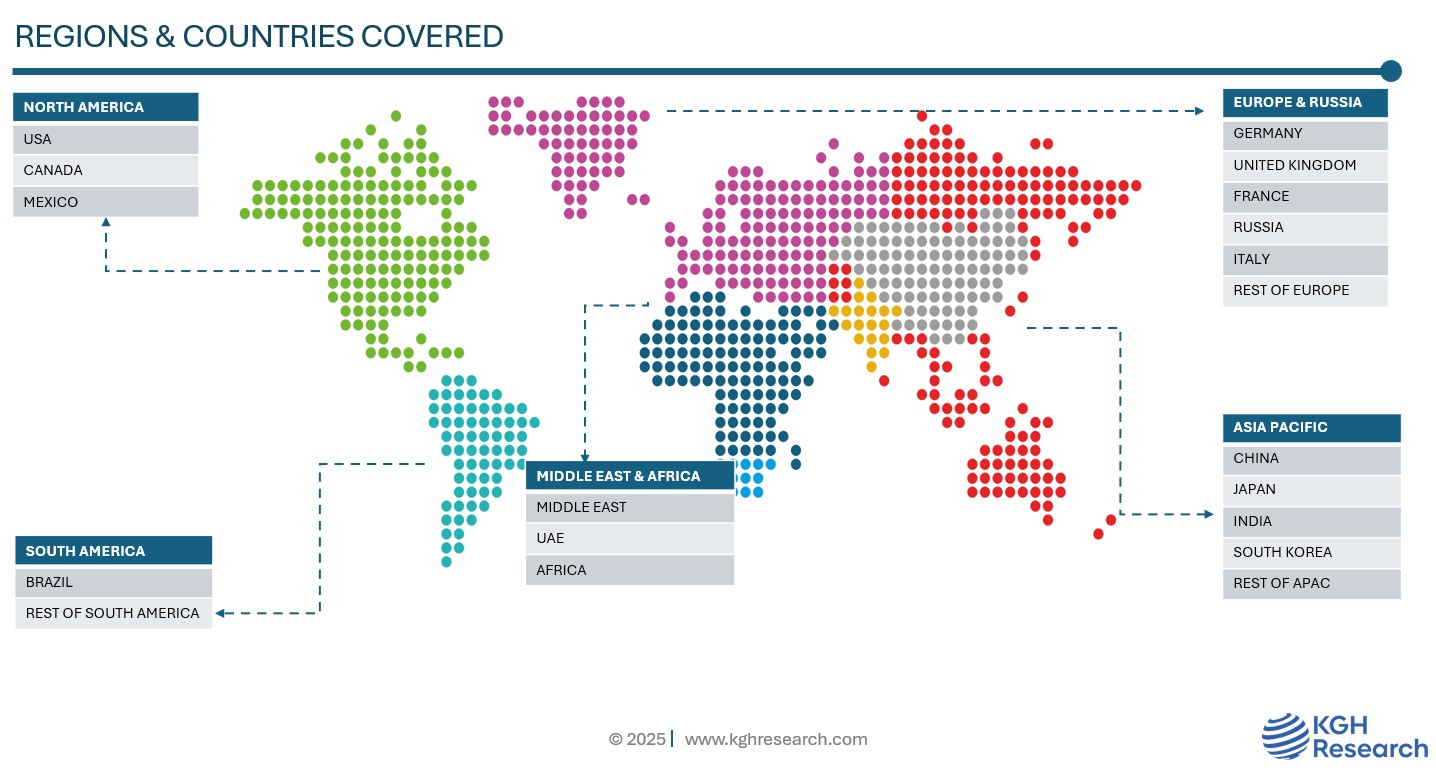
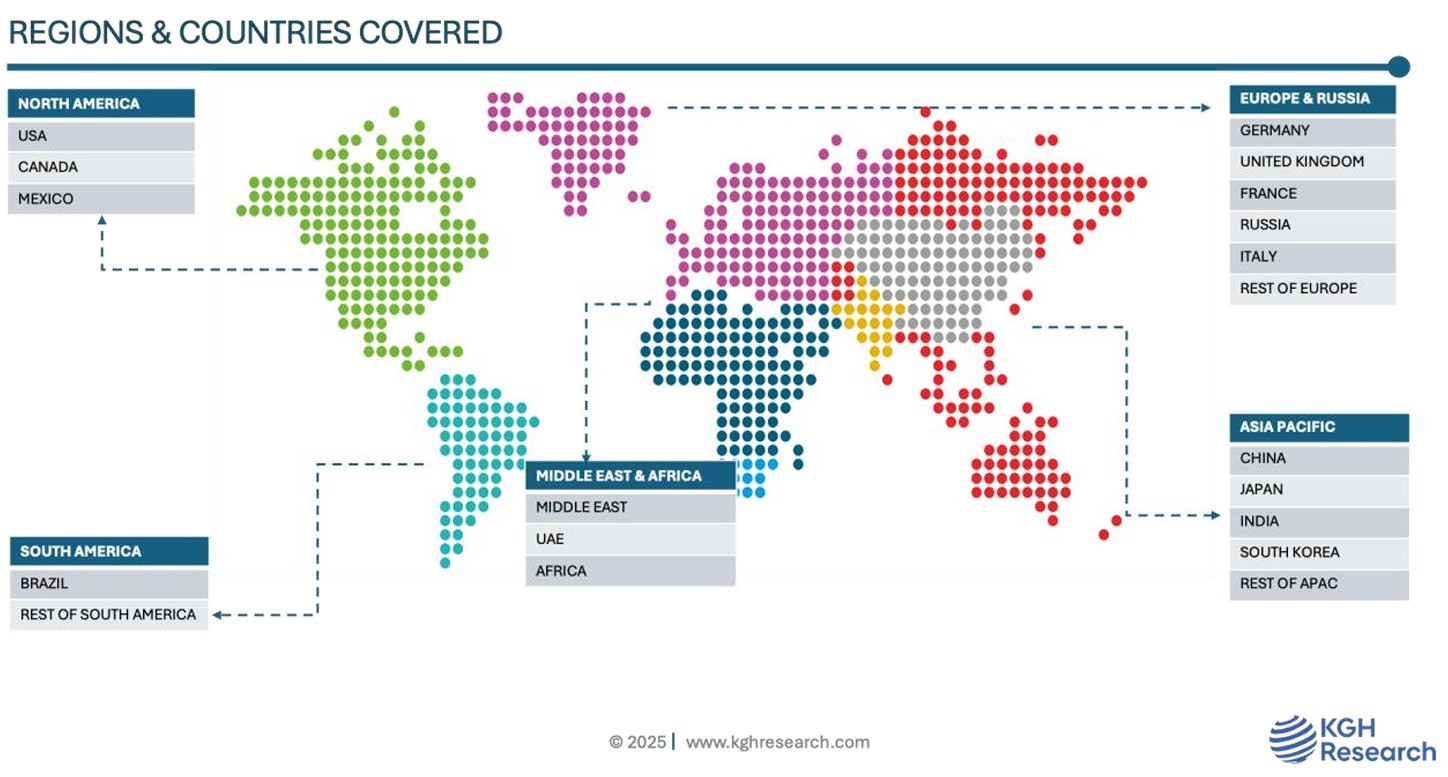
Regions Covered | North America, Europe, Asia Pacific, South America, Middle East & Africa |
Countries Covered | US, Canada, Mexico, UK, Germany, Italy, China, Japan, India, South Korea, Australia, South Africa, UAE, Saudi Arabia, Brazil, Argentina |
Companies Profiled | GENERAL ELECTRIC, MICROSOFT, SIEMENS, AWS, ANSYS, DASSAULT SYSTÈMES, PTC, AMAZON WEB ENTERPRISE SIZE INC., ANSYS INC., ABB, HONEYWELL, SCHNEIDER ELECTRIC, AUTODESK INC., AVEVA GROUP LIMITED, BENTLEY SYSTEMS INCORPORATED, DASSAULT SYSTÈMES, HEXAGON AB, NAVVIS, IBM CORPORATION, PTC, ANDRITZ, ROBERT BOSCH GMBH, RIVER LOGIC, ROCKWELL AUTOMATION, SAP. |