
E-Commerce Packaging Market (2022 - 2032)

E-COMMERCE PACKAGING MARKET SIZE & SHARE BY PRODUCT TYPE (BOXES, POLYBAGS, MAILERS, LABELS & TAPES, PROTECTIVE PACKAGING, OTHERS), BY PACKAGING TYPE (RIGID, FLEXIBLE), BY MATERIAL TYPE (PLASTIC, PAPER & PAPERBOARD, CORRUGATED BOARDS, WOODS, OTHERS), BY E-COMMERCE CHANNEL (ONLINE RETAILERS, BRAND-OWNED E-COMMERCE SITES), BY END USE AND BY REGION & COUNTRY – FORECAST TO 2032
| Report Code: PKG8003-0301 | Number of Pages: 300 | Report Format: PDF, EXCEL, PPT |
|---|---|---|
|
Trend Year: 2022 – 2024 |
Forecast Period: 2025 – 2032 |
Publish Date: SEPTEMBER 2025 |
- Report Summary
-
Tables of Content
- Segmentation
- Methodology
- User License & Pricing
- Sample Copy
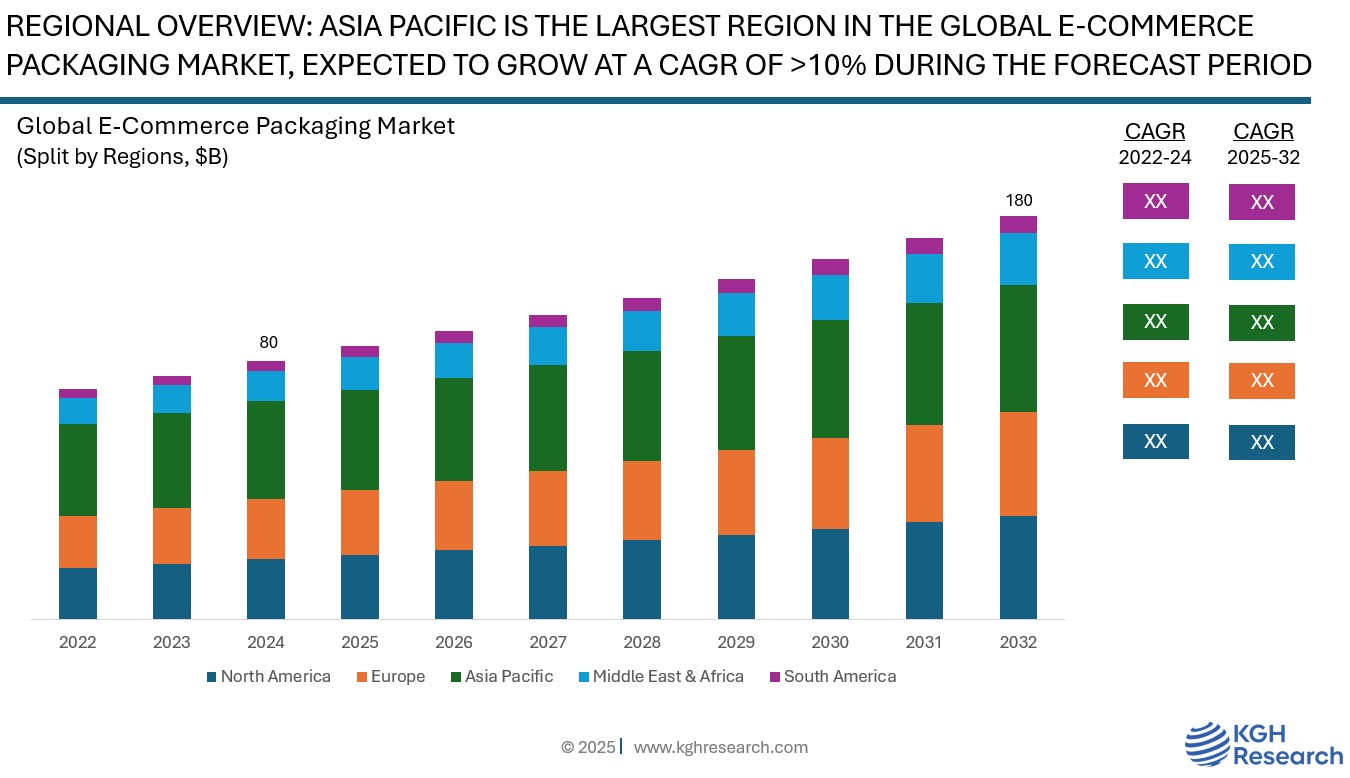
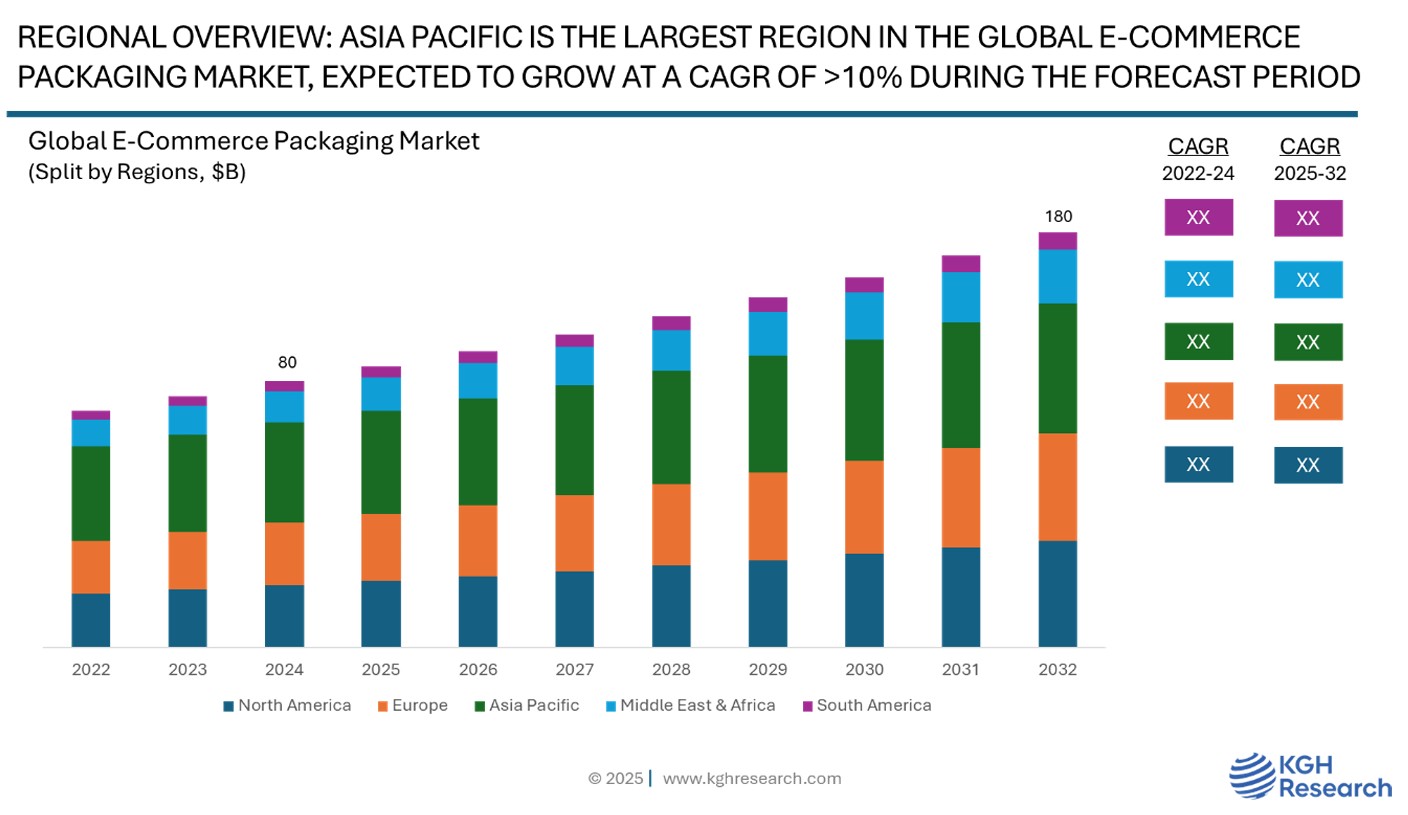
Market Overview: The global E-Commerce Packaging market was valued at approximately USD 80 billion in 2024 and is projected to grow at a compound annual growth rate (CAGR) of 10.6% from 2025 to 2032 to reach USD 180 billion by 2032. The rapid growth of online retail, along with the increase in internet and smartphone use and shifts in consumer buying habits towards convenience and home delivery, propels the global e-commerce packaging market. As more people turn to online shopping for a diverse array of products ranging from electronics and clothing to groceries and pharmaceuticals there is an escalating need for secure, protective, and sustainable packaging solutions that maintain product integrity during shipping. Furthermore, the emergence of omnichannel retail strategies and on-demand delivery services has heightened the demand for robust, efficient, and customizable packaging options. Environmental issues are also playing a significant role in the market, motivating companies to embrace recyclable, biodegradable, and eco-friendly packaging materials, which in turn is driving innovation and influencing new trends within the industry.
MARKET DYNAMIC
GROWTH DRIVERS:
- Surge in e-commerce platforms drives high packaging demand
- Increased preference for doorstep delivery fuels demand for e-commerce packaging
- Smart packaging (RFID, QR codes) and automation in packaging lines enhance efficiency
- Consumer and regulatory push for eco-friendly packaging boosts innovation in environmentally friendly materials
NEW GROWTH OPPORTUNITIES:
- Asia-Pacific, Latin America, and Africa offer untapped potential due to growing digital penetration.
- Demand for personalized and branded unboxing experiences is rising among retailers
- Compostable, reusable, and plant-based materials present significant innovation opportunities.
MARKET RESTRAINTS:
- Fluctuations in prices raw materials, such as plastic, metal, can affect profit margin.
- Strict government regulations around plastic and non-recyclable materials challenge manufacturers
- Handling packaging for different product categories requires significant operational sophistication
- Damage during transit
GROWTH HURDLES:
- Intense market competition
- Supply chain disruption
- Stringent export/import regulations
- Economic slowdowns or recessions
Product Type: Market Insights
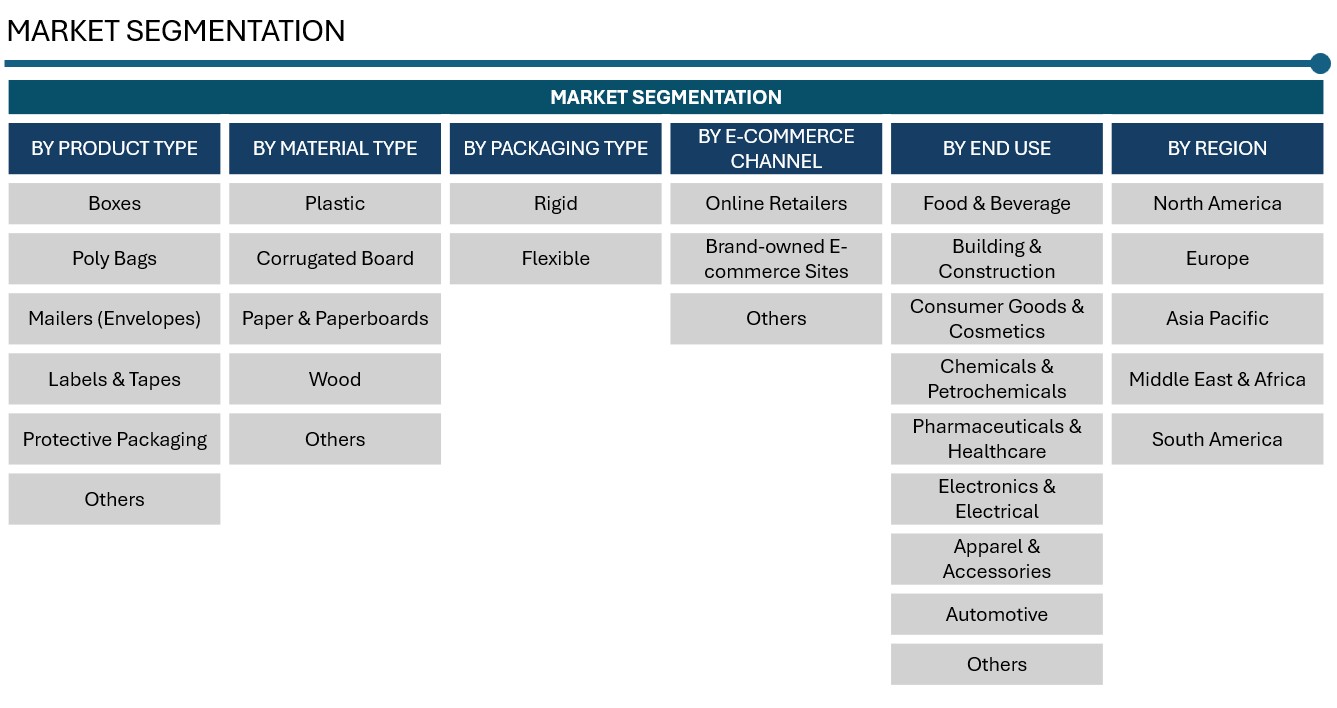
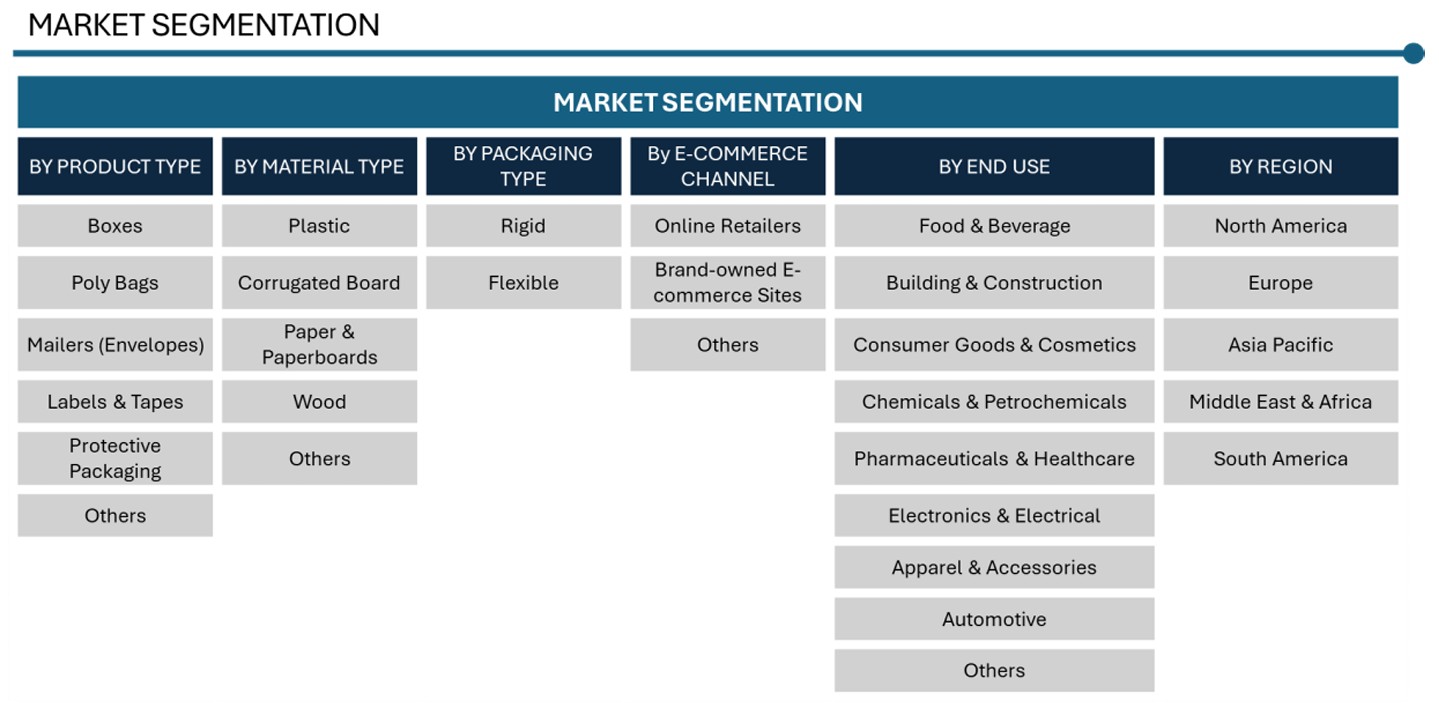
The worldwide packaging market for e-commerce is categorized by product type into boxes, poly bags, mailers (envelopes), labels & tapes, protective packaging, and other types. Boxes represent the most frequently utilized packaging option because of their durability, versatility, and capacity to safeguard a variety of products during transit. Poly bags are lightweight and economical, making them suitable for non-fragile items like clothing and accessories. Mailers, which comprise padded and rigid envelopes, are commonly used for smaller and less delicate items such as books, cosmetics, or documents. Labels and tapes are vital for securing packages and ensuring accurate tracking and branding, frequently employing tamper-proof and eco-friendly materials. Protective packaging, including bubble wrap, air pillows, and foam inserts, is critical for protecting fragile items like electronics or glass products.
Packaging Type: Market Insights
The global e-commerce packaging market is divided by packaging type into two categories: rigid packaging and flexible packaging. Rigid packaging consists of corrugated boxes, rigid mailers, and containers that offer excellent protection and structural stability, making them suitable for delicate or high-value items such as electronics and glass products. Conversely, flexible packaging includes materials like poly mailers, padded envelopes, and stretch wraps, which provide benefits like being lightweight, reducing shipping expenses, and maximizing space efficiency. Flexible options are particularly popular for soft goods such as clothing or small, non-breakable products. The growing emphasis on sustainability is driving innovation in both categories, with recyclable rigid packaging and compostable flexible options becoming more prominent.
Material Type: Market Insights
The global e-commerce packaging sector is categorized by material type into plastic, paper & paperboard, corrugated board, wood, and other materials. Corrugated board maintains a leading position because of its strength, lightweight nature, and affordability, making it suitable for shipping and safeguarding various products. Plastic options, including poly mailers and bubble wrap, are commonly employed for their adaptability and cushioning properties; however, concerns regarding their environmental impact have initiated a transition towards more sustainable choices. Paper & paperboard are increasingly preferred due to their recyclability and are frequently used in wrapping and lightweight packaging solutions. Wood is mainly utilized for transporting heavy or delicate items in bulk, especially in business-to-business transactions. The ‘others’ category encompasses emerging sustainable materials such as biodegradable films, molded fibers, and reusable packaging options, which are becoming more popular as environmental awareness rises. This classification emphasizes the variety of materials utilized in e-commerce packaging according to product requirements, sustainability objectives, and cost factors.
E-Commerce Channel: Market Insights
The global e-commerce packaging market is divided by e-commerce channels into online retailers, brand-owned e-commerce sites, and other categories. Online retail companies, such as Amazon, Flipkart, and Alibaba hold the largest market share due to their substantial daily shipping volumes across various product categories that necessitate durable and scalable packaging solutions. Brand-owned e-commerce sites, such as Nike, Apple, or Zara, that sell directly to consumers through their own platforms, also play a significant role in the market. These companies prioritize personalized and branded packaging to improve customer experience and enhance brand recognition. The ‘others’ category encompasses third-party logistics providers and subscription box services, which depend on tailored, secure, and often eco-friendly packaging options. This division illustrates the increasing complexity of e-commerce distribution channels and their impact on packaging needs and innovation.
End Use: Market Insights
Based on end use, the global e-commerce packaging market is categorized into Food & Beverage, Building & Construction, Electronics & Electrical, Consumer Goods & Cosmetics, Apparel & Accessories, Chemicals & Petrochemicals, Pharmaceuticals & Healthcare, Automotive, and Others. The Food & Beverage category requires secure and often temperature-sensitive packaging to preserve product integrity during transportation. Packaging for Building & Construction materials needs to be durable and reinforced to endure heavy weights and rough handling. The Electronics & Electrical sector emphasizes anti-static and shock-resistant packaging to safeguard delicate items. Consumer Goods & Cosmetics prioritize visually attractive packaging that also provides protection. Apparel & Accessories utilize lightweight yet stylish packaging that aligns with brand identity. Chemicals & Petrochemicals necessitate compliance-oriented, leak-proof packaging for managing hazardous or reactive substances. The Pharmaceuticals & Healthcare field stresses the importance of hygiene, tamper-evidence, and adherence to regulations. In the Automotive sector, substantial and typically heavy components need sturdy, shock-absorbing packaging. The Others category encompasses niche markets and emerging applications that are contributing to the increasing diversity of packaging requirements. This segmentation underscores the broad array of packaging needs influenced by product type, safety, and branding considerations within the e-commerce supply chain.
Regional: Market Insights
The Asia Pacific region dominates the global e-commerce packaging market, driven by factors such as economic development, digital advancements, and a rapidly expanding online retail sector. Nations including China, India, Japan, South Korea, and those in Southeast Asia are experiencing swift growth in their e-commerce markets, aided by improved internet connectivity, increased smartphone adoption, and favorable demographic trends, particularly among a large, youthful population attracted to digital shopping avenues.
China stands out as a leader in the region, hosting major companies like Alibaba and JD.com, with its well-established e-commerce and logistics infrastructure. Likewise, India is seeing remarkable expansion through platforms like Amazon India and Flipkart, alongside government programs such as Digital India, which enhance digital infrastructure and encourage online transactions. Increased urbanization and higher disposable incomes throughout the region are further motivating consumers to opt for online shopping, which in turn drives the need for effective, protective, and sustainable packaging options.
Furthermore, the existence of robust manufacturing bases in countries like China and Vietnam facilitates large-scale production of affordable packaging materials such as corrugated cardboard, poly bags, mailers, and bubble wrap. The logistics sector and third-party delivery services are also advancing quickly in the area, necessitating strong packaging solutions that guarantee product safety during last-mile delivery.
Growing environmental regulations and heightened awareness regarding sustainable packaging are fostering innovation in recyclable and biodegradable materials. Consequently, Asia Pacific not only leads in market volume but is also emerging as a center for packaging innovation, reinforcing its role as the largest and most rapidly growing region in the global e-commerce packaging market.
Competition: E-Commerce Packaging
The global E-Commerce Packaging sector is fiercely competitive, with top companies prioritizing innovation, product effectiveness, sustainability, and strategic collaborations to enhance their market presence and secure a competitive advantage. These organizations are investing in advanced materials, smart packaging technologies, and recyclable options to address the changing needs of end-use industries and adhere to environmental regulations. Key players in the global E-Commerce Packaging market include Smurfit Kappa Group, Mondi Group, DS Smith plc, International Paper, Sealed Air Corporation, WestRock Company, Amcor plc, Pregis LLC, Ranpak Holdings Corp. These companies focus on developing sustainable, lightweight, and protective packaging solutions to meet the growing demands of the e-commerce industry across various sectors such as electronics, fashion, food & beverage, and personal care.
GLOBA E-COMMERCE PACKAGING MARKET SNAPSHOT | |
Market size in 2024 | USD 80 Billion |
Market forecast in 2032 | USD 180 Billion |
Compound Annual Growth Rate (2025-2032) | 10.6% |
Historical Data (Years) | 2022-2024 |
Forecast Data (Years) | 2025-2032 |
Growth Drivers | Surge in e-commerce platforms drives high packaging demand, Increased preference for doorstep delivery fuels demand for e-commerce packaging, Smart packaging and automation in packaging lines enhance efficiency, Consumer and regulatory push for eco-friendly packaging boosts innovation in environmentally friendly materials. |
Segments Covered | Product Type, Material Type, E-Commerce Channel, Packaging Type, End Use, And Region |
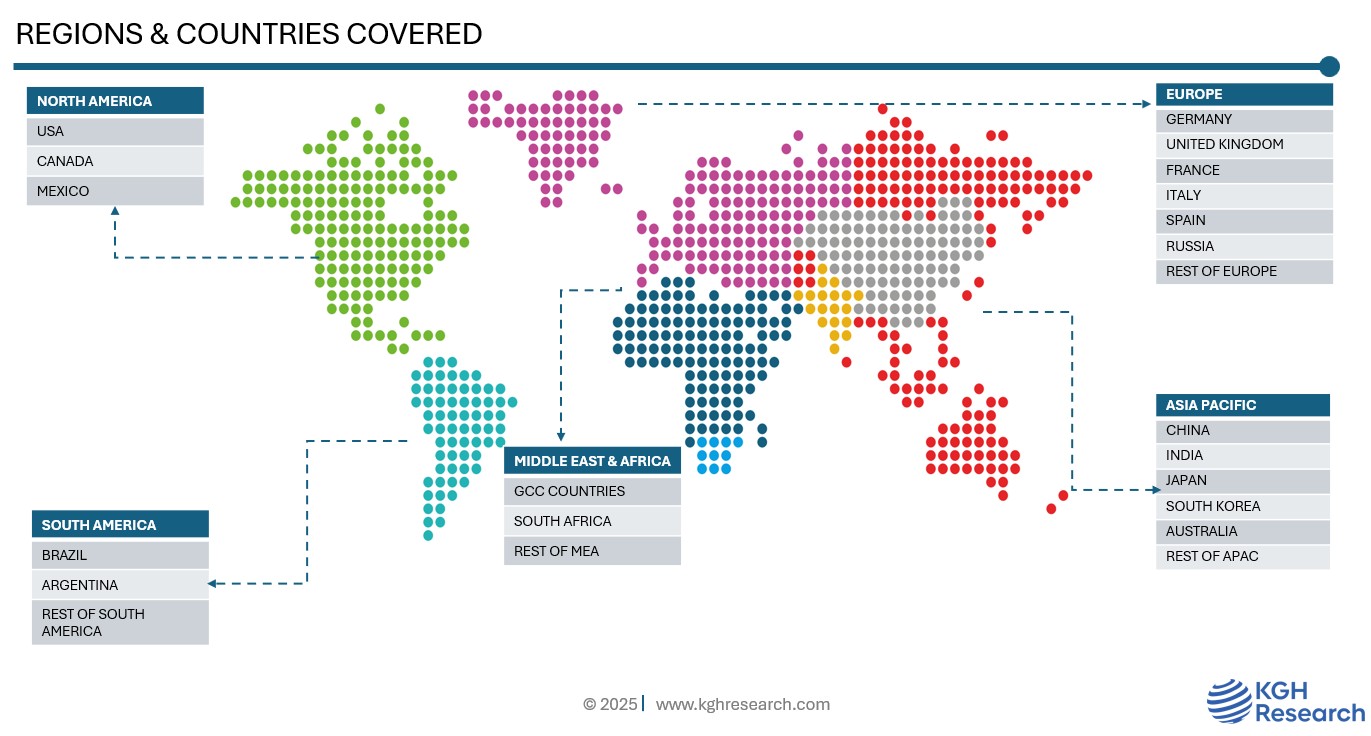
Regions Covered | North America, Europe, Asia Pacific, South America, Middle East & Africa |
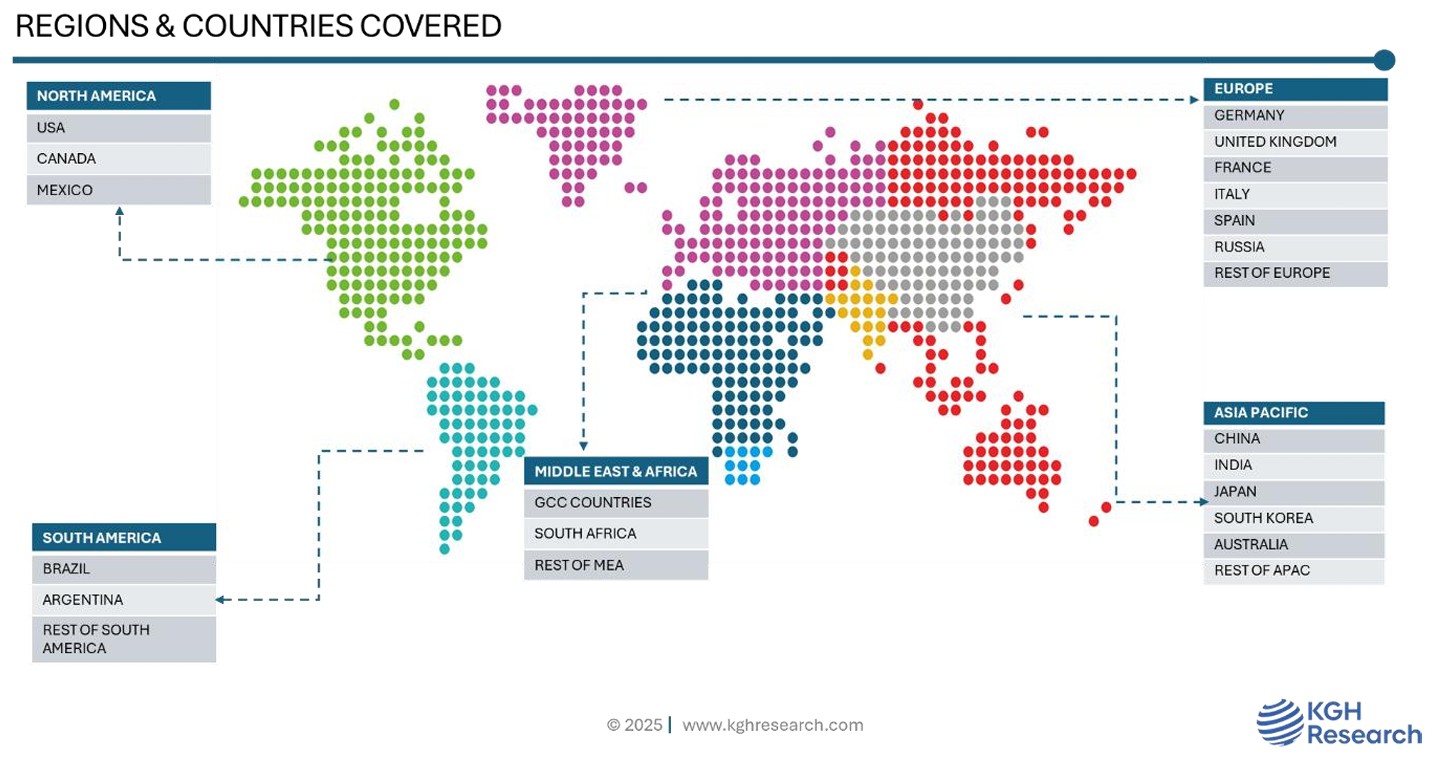
Countries Covered | US, Canada, Mexico, UK, Germany, Italy, France, Spain, Russia, China, India, Japan, South Korea, Australia, South Africa, Brazil, Argentina |
Companies Profiled | BERRY GLOBAL, SMURFIT KAPPA GROUP, MONDI GROUP, DS SMITH PLC, INTERNATIONAL PAPER, SEALED AIR CORPORATION, WESTROCK COMPANY, AMCOR PLC, PREGIS LLC, RANPAK HOLDINGS CORP., AVERY DENNISON CORPORATION, HUHTAMAKI OYJ, STORA ENSO, TOPPAN PRINTING CO., LTD., AND MANY MORE |