
Electric Scooter Market (2022 - 2032)
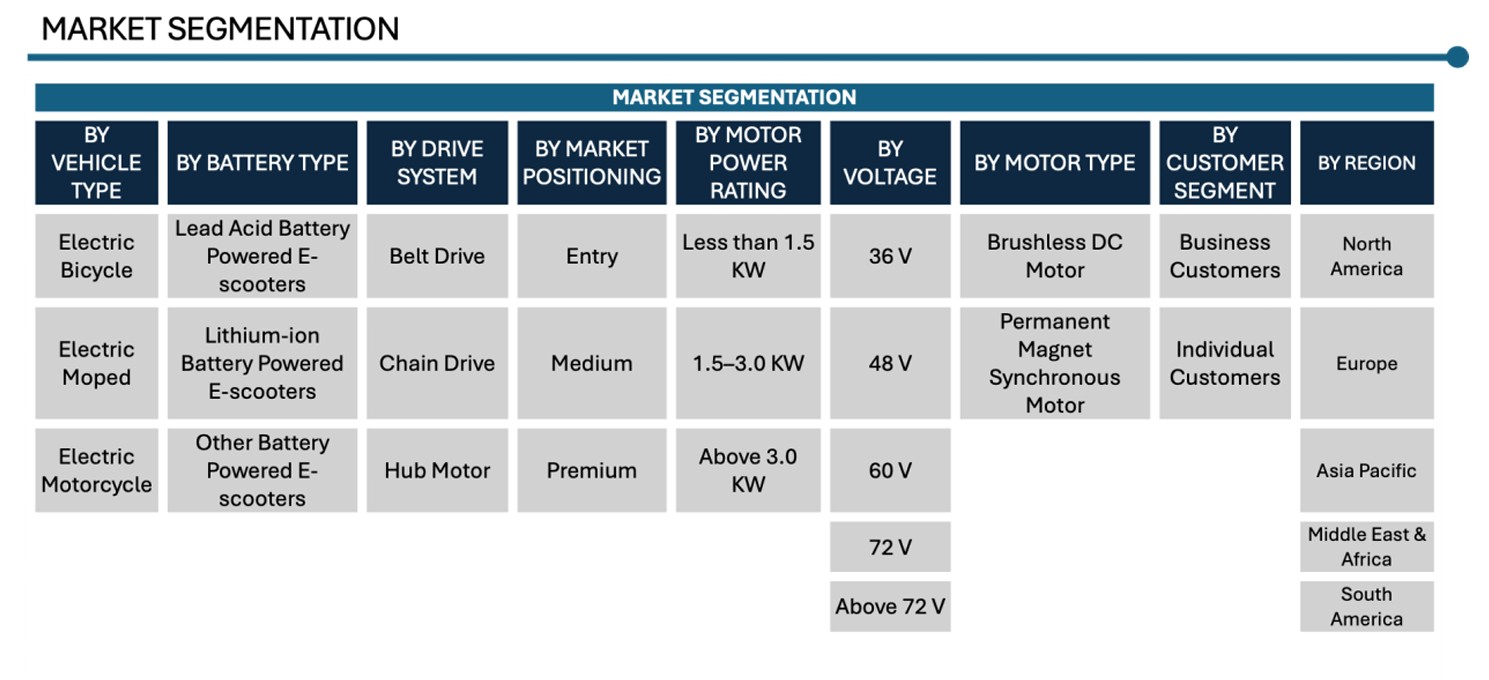
ELECTRIC SCOOTER MARKET SIZE & SHARE BY VEHICLE TYPE (BICYCLE, MOPED, MOTORCYCLE) BY BATTERY TYPE (LEAD ACID, LITHIUM-ION) BY DRIVE TYPE (BELT DRIVE, CHAIN DRIVE, HUB MOTOR) BY MOTOR TYPE (BLDC, PMSM), BY MOTOR POWER RATING (3.0KW) BY VOLTAGE (36V, 48V, 60V, 72V, >72V) BY CUSTOMER, BY MARKET POSITIONING, AND BY REGION & COUNTRY – FORECAST TO 2032
| Report Code: AT2002-0102 | Number of Pages: 400 | Report Format: PDF, EXCEL, PPT |
|---|---|---|
|
Trend Year: 2022 – 2024 |
Forecast Period: 2025 – 2032 |
Publish Date: JULY 2025 |
- Report Summary
-
Tables of Content
- Segmentation
- Methodology
- User License & Pricing
- Sample Copy
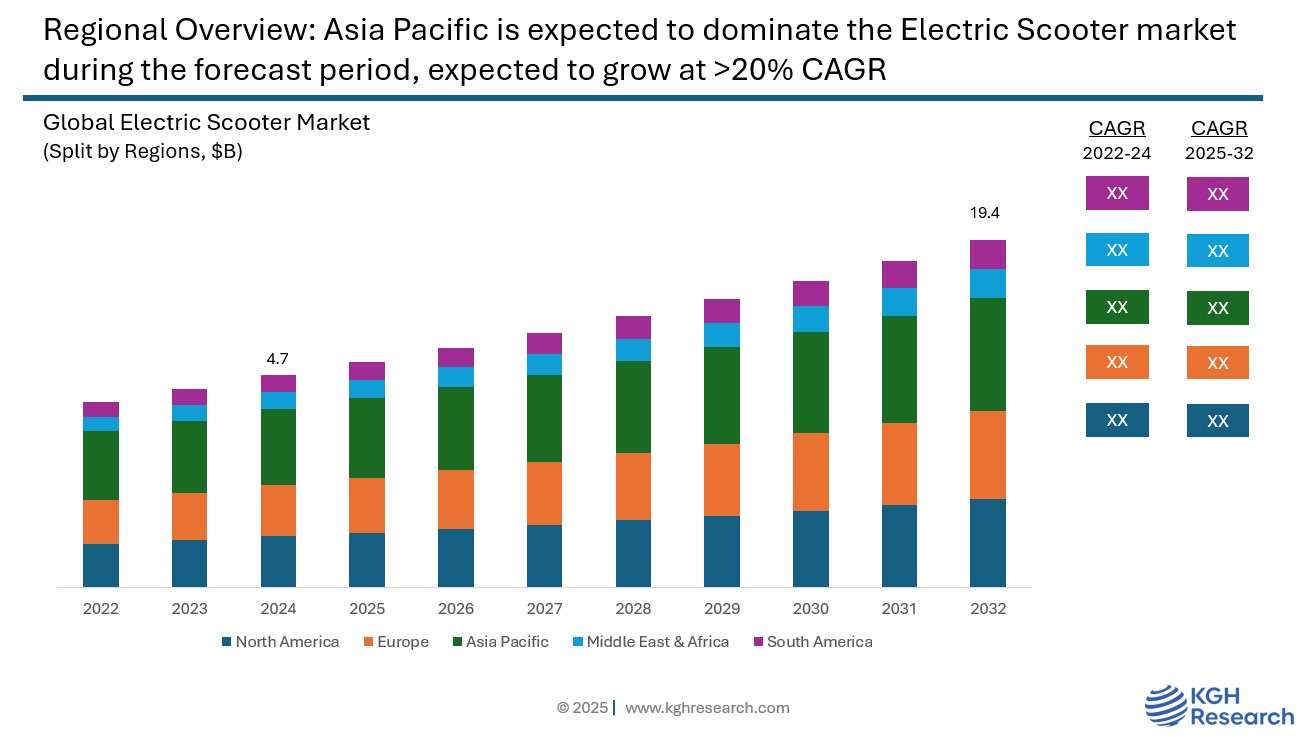
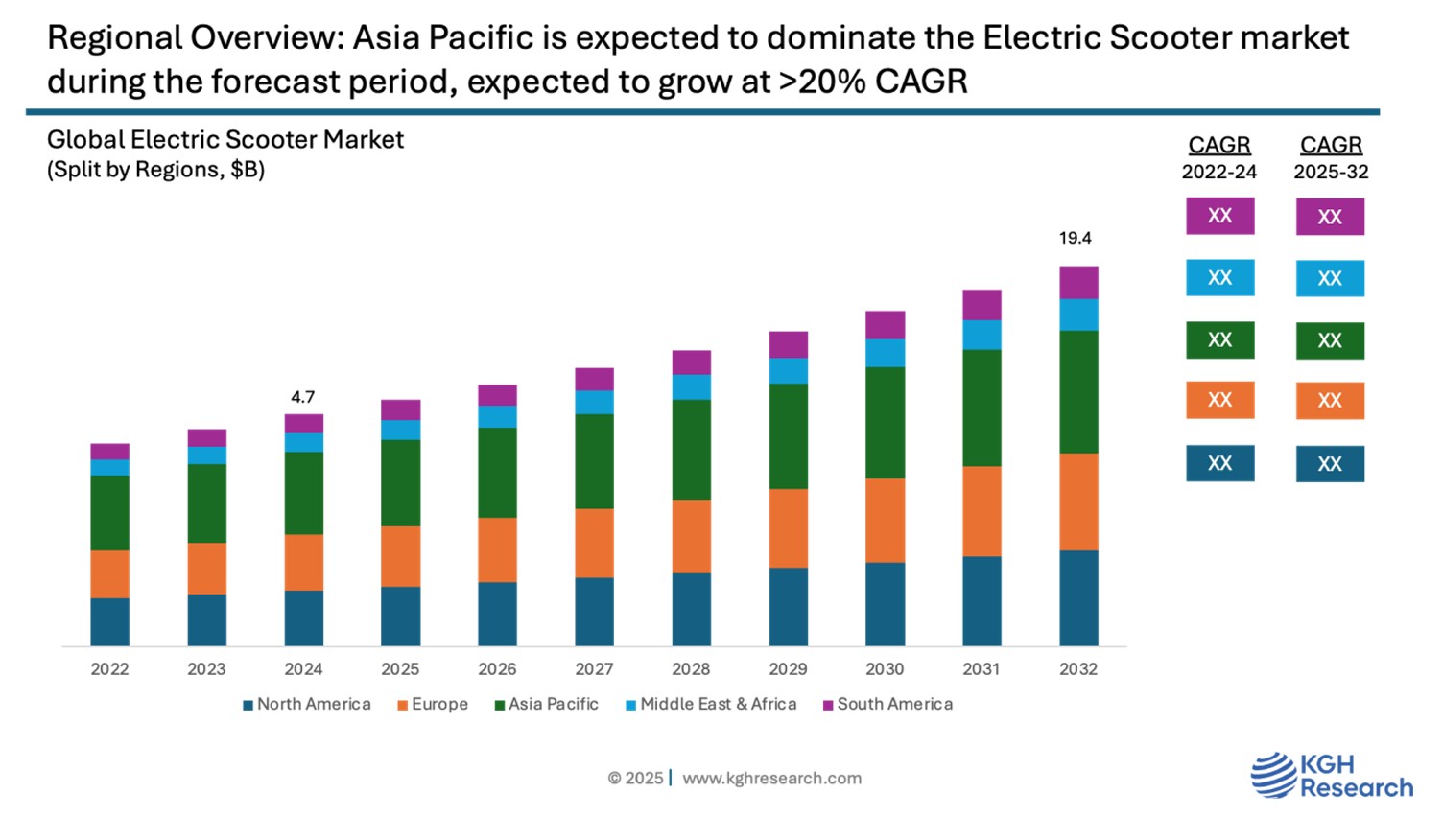
Market Overview: The global electric scooter market was valued at approximately USD 4.7 billion (More than 100 million units) in 2024 and is projected to grow at a compound annual growth rate (CAGR) of 19.5% from 2025 to 2032 to reach US $19.4 billion opportunity by 2032. The rising demand for cost effective transportation, along with increasing concerns towards greenhouse gas emissions, is expected to accelerate the adoption of electric scooters during the forecast period. Increasing demand for mid & premium range e-scooter powered with high density lithium-ion batteries offering extended range and fast charging capability driving more end users to switch towards electric mobility. Government regulations, such as the U.S. Environmental Protection Agency’s (EPA) greenhouse gas emission standards, India’s BS-VI, and China VI norms, are pushing the shift toward cleaner mobility solutions. Electric scooters offer several advantages over traditional vehicles, including higher mechanical efficiency, quieter operation, and lower maintenance cost, making them increasingly appealing to consumers. Furthermore, the growing integration of e-scooters into shared mobility services and rental platforms is further boosting their demand and contributing to overall market growth.
MARKET DYNAMIC
GROWTH DRIVERS:
- Advancements in lithium-ion battery efficiency, durability, and charging speed are making e-scooters more practical
- Extended Range
- Declining battery prices
- Increasing integration of e-scooters into shared mobility platforms
- Smart and Connected Features
NEW GROWTH OPPORTUNITIES:
- Growing need for anti-drone systems in critical civilian infrastructure such as airports, stadiums, monuments of historical importance, public gatherings, and other proceeding
- Integration of AI/ML, multi-sensor arrays (Radar, RF, optical), and scalable ground-based platforms enhance effectiveness
- Rising demand in emerging economies
MARKET RESTRAINTS:
- Lack of proper charging infrastructure in emerging economies
- Lack of power output and limited range
- Battery heating issues
GROWTH HURDLES:
- Technological barrier
- Trade tensions, tariffs, and geopolitical instability likely to strain global supply chain and impact electric scooter manufacturing cost
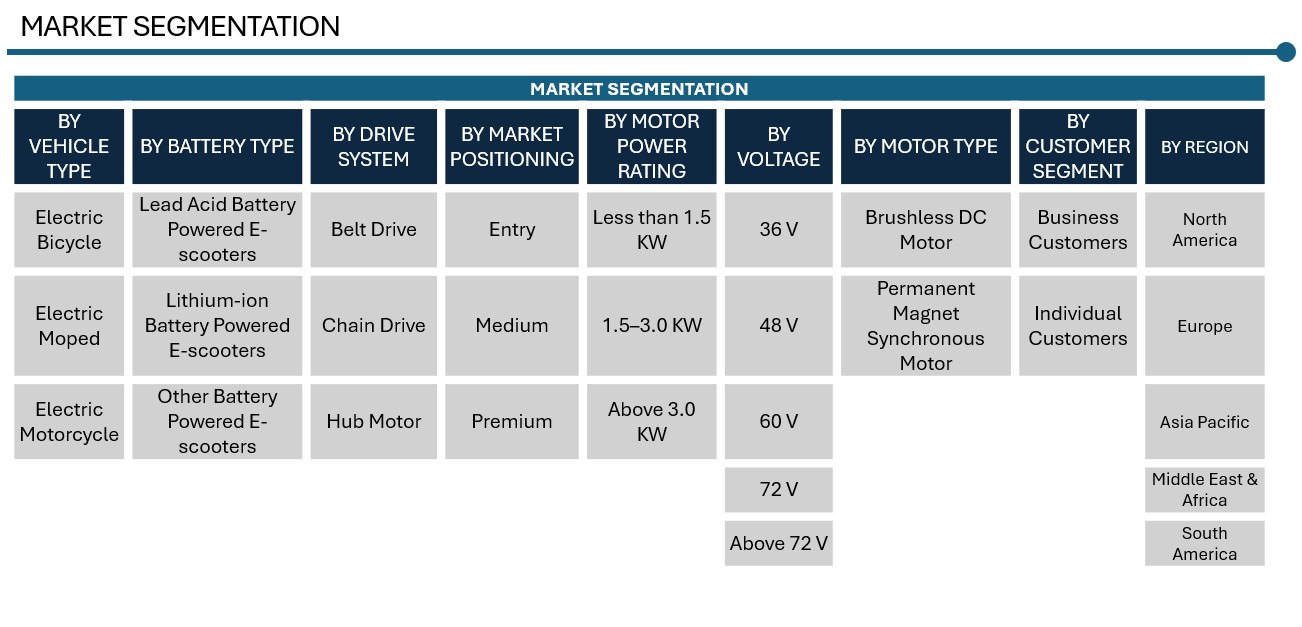
Vehicle Type: Electric Bicycles - Light, portable, no driver’s license, strong in mass market and last-mile delivery.
Electric bicycles lead the global electric scooters market by vehicle type, due to their broad appeal, affordability, and practical use across diverse environments. Their popularity stems from being a sustainable and efficient option for commuting, exercise, and leisure, appealing to a wide range of users from urban commuters to older adults seeking low-impact mobility solutions. One of the major advantages of e-bikes is that in many regions, they can be used without a license or registration, making them more accessible to the public. Moreover, supportive government policies, especially in Europe and Asia, including subsidies and the development of cycling infrastructure, have accelerated their adoption. Due to their lower cost, ease of operation, and seamless fit into existing transportation ecosystems, e-bikes have become the most widely embraced segment in the electric scooter market.
Battery Type: Lithium-ion will continue to remain dominant battery type in use, offering perfect balance between price and performance.
Lithium-ion batteries have become the top choice in the electric scooter market, outpacing lead-acid batteries in both popularity and usage. This is mainly because lithium-ion batteries offer better performance—they’re lighter, last longer, charge faster, and allow scooters to go further on a single charge. These benefits make them more convenient and cost-effective over time, which is why more people are choosing them. They’re also cleaner and more environmentally friendly, fitting in well with the push for greener transportation. While lead-acid batteries were once popular due to their lower price, the cost of lithium-ion technology has dropped significantly, making it the go-to option for most electric scooter buyers.
Drive System: Market Insights
The electric scooter market, based on drive type, is divided into belt drive, chain drive, and hub motor systems. Of these, hub motors are the most used drive type because they are compact in size, more efficient, and require less maintenance. In contrast to belt or chain drive technology, hub motors are built within the wheel itself, thereby omitting the necessity of having exterior transmission parts, minimizing mechanical losses, and leading to a quieter ride. Belt and chain drives, although still applied in some models for certain performance requirements, are subject to greater wear and tears and necessitate frequent maintenance. The increasing popularity of slim, low-maintenance, and power-efficient electric scooters continues to fuel the predominance of hub motor technology on the market.
Market Positioning: Medium Range – the largest segment, balancing price, feature, and performance. Premium – Fastest growth, popular amongst lifestyle and business buyers.
Based on market positioning the electric scooter market is divided into entry-level, medium-range, and premium. Entry level is the electric scooters designed for budget-conscious consumers, offering basic features with a focus on affordability. Medium range scooters strike a balance between performance and price. They offer better range, improved speed, and additional features like better suspension and enhanced battery life compared to entry-level models. Premium electric scooters are high-performance vehicle that offer superior features and performance, such as longer ranges, faster speeds, advanced suspension systems, and smart technologies like application integration and GPS.
Voltage: Market Insights
The electric scooter market is also divided based on voltage, with common segments including 36V, 48V, 60V, 72V, and above 72V. Each voltage range offers different performance levels, catering to various consumer needs and these voltage variations allow manufacturers to tailor their offerings to different market segments, from budget-friendly models for casual use to high-performance electric scooters for long-distance or high-speed riders and travellers.
Motor Power Rating: Market Insights
By motor power rating, electric scooter market is divided into <1.5 kW, 1.5–3.0 kW, and >3.0 kW. <1.5 kW are the scooters are typically entry-level models, offering lower speeds and shorter ranges. 1.5–3.0 kW range are the scooters in this power range strike a balance between performance and price. Above 3.0 kW are the high-performance electric scooters are designed for speed enthusiasts and longer commutes. These motor power ratings enable manufacturers to serve a wide range of riders, from those looking for simple, everyday transportation to those seeking high-performance models with faster speeds and extended ranges.
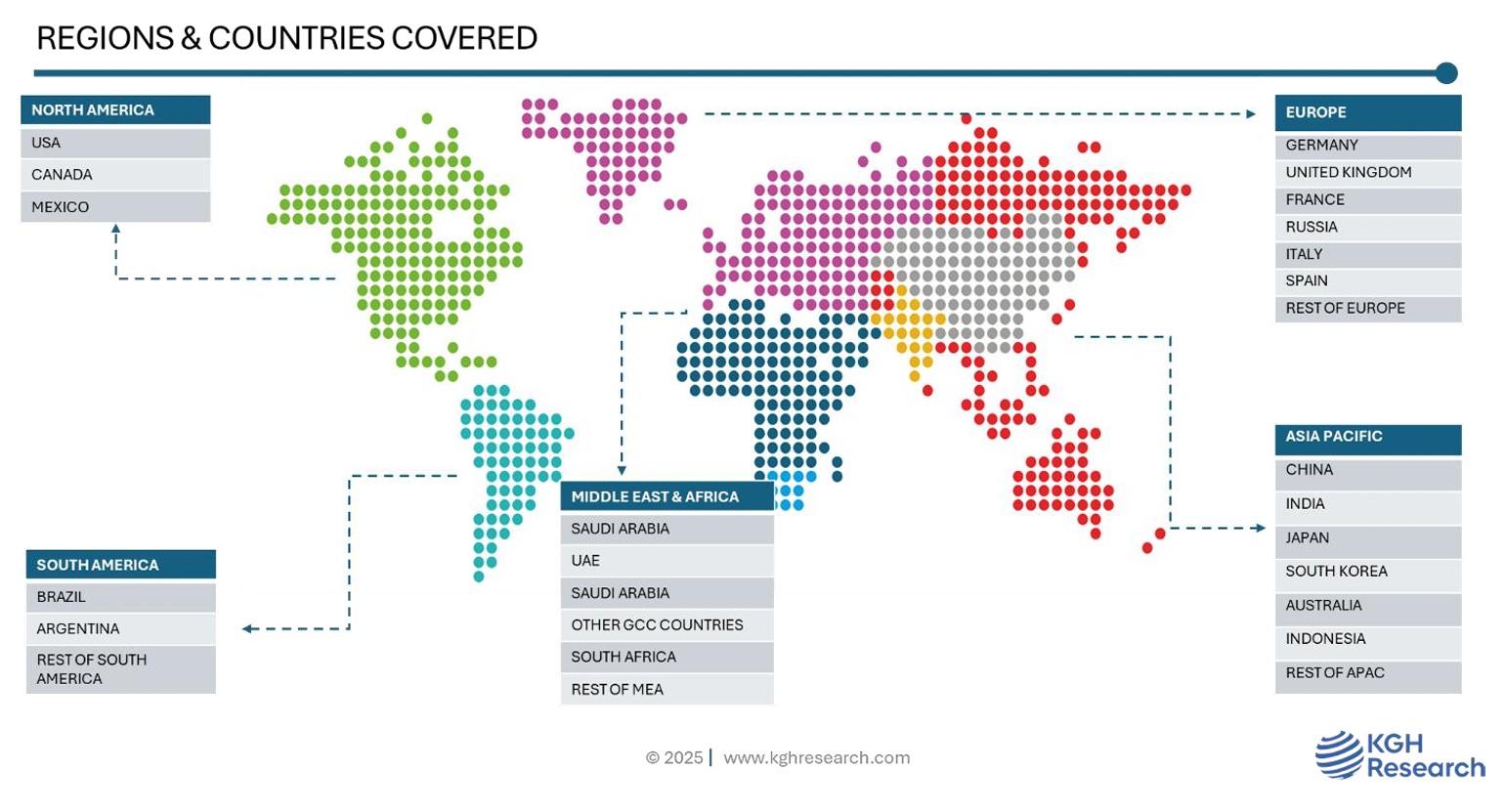
Regional: Market Insights
Asia-Pacific has the highest market share in the electric scooter industry, led by a combination of high urban population density, increasing urbanization, and rising environmental consciousness. China, India, and Japan are among the countries that have emerged as leading players with strong local demand, favorable government policies, and growing charging infrastructure. China, dominates the market worldwide with its strong manufacturing strength, huge consumer base, and stringent emission standards that promote electric mobility. India is also seeing a rapid expansion, driven by schemes such as FAME II, state subsidies, and increasing fuel prices, which are inducing consumers to make the shift towards electric options. In addition, the dense urban population in the region and the relatively short commuting distances further make electric scooters a viable and cost-effective option for regular use. Low-cost models’ availability, domestic production benefits, and rising investments from both domestic and foreign firms further reinforce Asia-Pacific’s dominant position in the international market of electric scooters.
Competition: Electric scooter
The electric scooter market is highly competitive, with key players focusing on innovation, product efficiency, and strategic partnerships to strengthen their market position. Major companies include Yadea Technology, Ather Energy, Ola Electric, TVS Motor, and Gogoro. These players are investing in R&D to develop advanced electric scooter systems for applications in data centers, telecommunication, power generation, healthcare, manufacturing, oil & gas, logistics and other end use industries, driving ongoing competition and technological advancement in the market.
Yadea Technology, Ather Energy, Ola Electric, TVS Motor, and Gogoro are among the leading companies active in the market.
Yadea Technology Group Co., Ltd., based in Wuxi, China, has emerged as a dominant force in the global electric two-wheeler market. Since its founding in 2001, the company has consistently maintained its leadership, ranking as the top seller of electric two-wheelers worldwide. Yadea offers a diverse range of products, including high-performance electric motorcycles, mopeds, e-bikes, and kick scooters. Its dedication to innovation is reflected in the development of cutting-edge battery technologies like graphene batteries and its partnerships with esteemed design firms such as the Porsche Design Center. With manufacturing facilities in China and Vietnam and distribution in over 90 countries, Yadea has built a strong international footprint. Its strategic focus on eco-friendly mobility and continuous R&D investment have firmly positioned it as a global leader in the electric scooter industry
ELECTRIC SCOOTER MARKET SNAPSHOT | |
Market size in 2024 | USD 4.7 Billion |
Market forecast in 2032 | USD 19.4 Billion |
Compound Annual Growth Rate (2025-2032) | 9.5% |
Historical Data (Years) | 2022-2024 |
Forecast Data (Years) | 2025-2032 |
Segments Covered | Vehicle Type, Battery Type, Drive System, Market Positioning, Motor Power Rating, Voltage, Motor Type, Customer Segment |
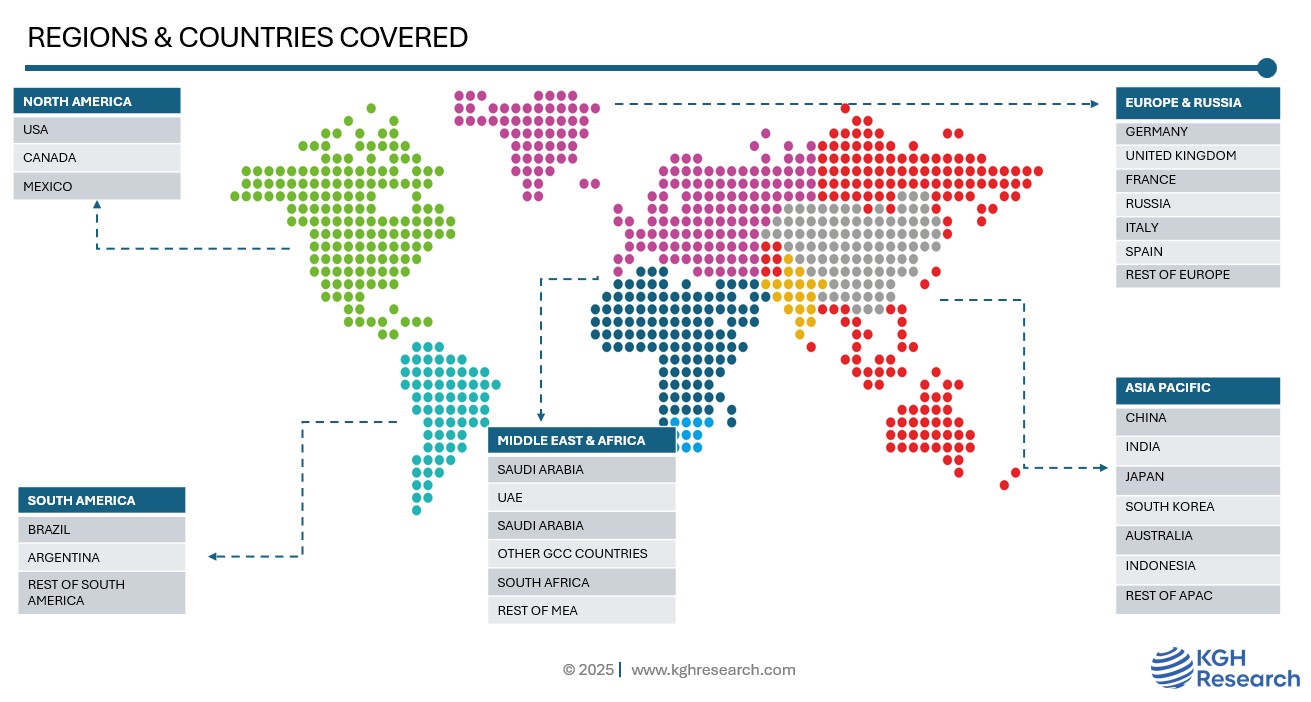
Regions Covered | North America, Europe, Asia Pacific, South America, Middle East & Africa |
Countries Covered | US, Canada, Mexico, UK, Germany, Italy, France, Spain, Russia, China, India, Japan, South Korea, Australia, Indonesia UAE, Saudi Arabia, South Africa, Brazil, Argentina |
Companies Profiled (25+) | YADEA TECHNOLOGY GROUP, AIMA, SUNRA, TAILING, BENLG, LUYUAN, ZONG SHEN, JINYI, XINRI, LOVOL, HUAIHAI, OLA ELECTRIC, ATHER, TVS MOTOR COMPANY, HERO ELECTRIC, HARLEY DAVIDSON, ZERO MOTORCYCLES, LIGHTENING MOTORCYCLE CORP., ARC V, DAMON MOTORS, TRIUMPH, KTM, BMW, ENERGICA MOTOR COMPANY, STARK FUTURE, BLACTEA, REVELO, AND MANY MORE |