
Smart Packaging Market (2022 - 2032)
SMART PACKAGING MARKET SIZE & SHARE BY PRODUCT TYPE (CORRUGATED BOXES, POLY BAGS, TAPES, PROTECTIVE PACKAGING, MAILER, OTHERS), BY PACKAGING TYPE (MODIFIED ATMOSPHERE PACKAGING, ACTIVE PACKAGING, INTELLIGENT PACKAGING), BY END USE (FOOD & BEVERAGES, PERSONAL CARE & COSMETICS, ELECTRONICS & ELECTRICALS, PHARMACEUTICALS, E-COMMERCE) AND BY REGION & COUNTRY – FORECAST TO 2032
| Report Code: PKG8004-0201 | Number of Pages: 400 | Report Format: PDF, EXCEL, PPT |
|---|---|---|
|
Trend Year: 2022 – 2024 |
Forecast Period: 2025 – 2032 |
Publish Date: JULY 2025 |
- Report Summary
-
Tables of Content
- Segmentation
- Methodology
- User License & Pricing
- Sample Copy
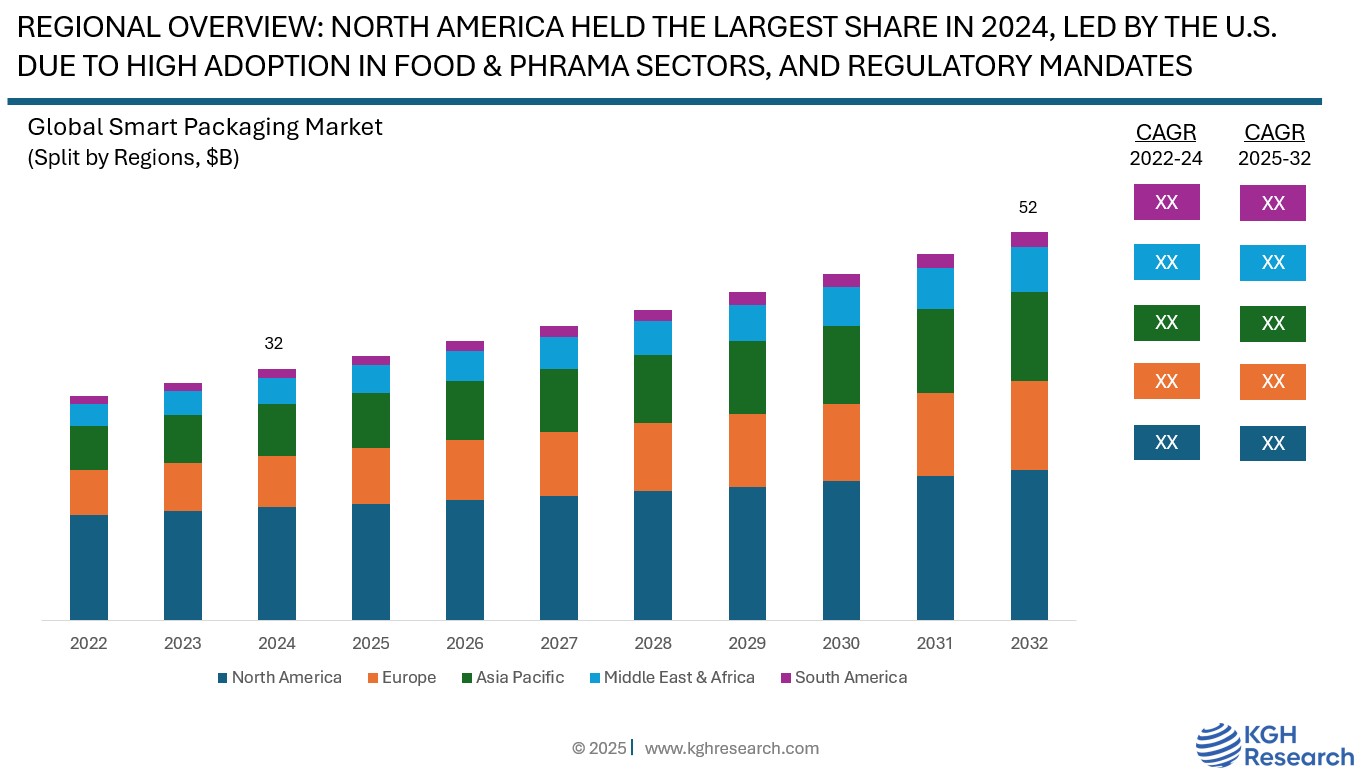
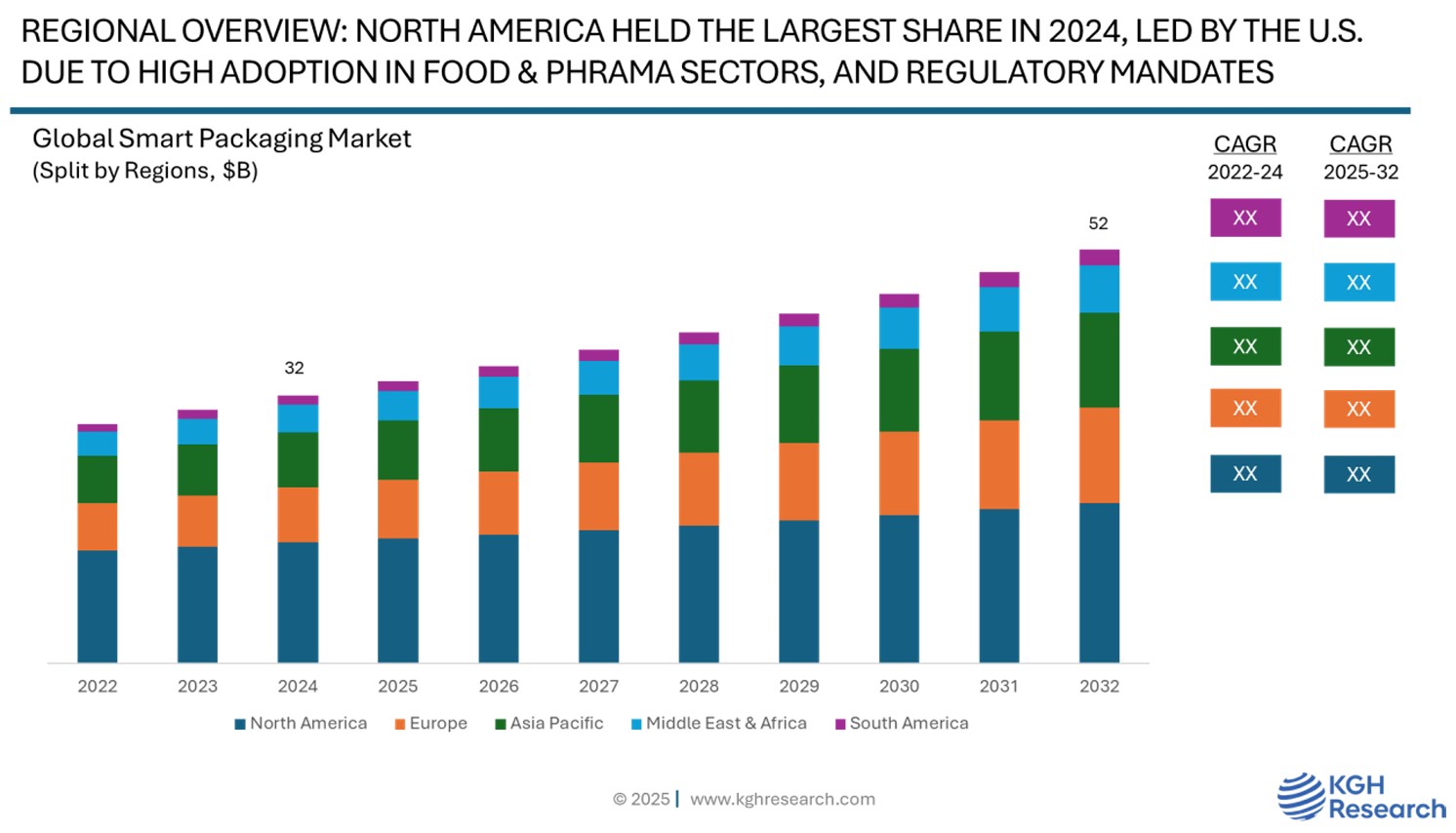
Market Overview: The global smart packaging market was valued at approximately USD 32 billion in 2024 and is projected to grow at a compound annual growth rate (CAGR) of 6.1% from 2025 to 2032 to reach USD 52 billion by 2032. The global smart packaging market is influenced by several important factors, such as increasing consumer preferences for food safety and freshness, the growing implementation of IoT and sensor technologies in packaging, and the heightened demand for effective supply chain management. Furthermore, the rise of e-commerce, greater awareness regarding sustainable and smart packaging solutions, and regulatory demands for product authenticity and traceability are major contributors to the market’s expansion. The interest from sectors like food & beverages, pharmaceuticals, and electronics for real-time monitoring, anti-counterfeit features, and solutions that extend shelf life also significantly drives the uptake of smart packaging.
MARKET DYNAMIC
GROWTH DRIVERS:
- Rising demand for freshness and safety
- Integration of IoT, RFID, and NFC in packaging enhances supply chain efficiency and product interaction
- Governments mandate for secure, traceable packaging for sensitive goods like food and drugs, boosting smart solutions.
- Growing e-commerce and global logistics
NEW GROWTH OPPORTUNITIES:
- Growing focus on eco-friendly packaging integrated with smart features offers room for innovation.
- Growth in e-commerce penetration in Asia Pacific and Latin America presents untapped potential
MARKET RESTRAINTS:
- High initial cost
- Technical limitations
- Diverse requirements across industries and geographies lead to inconsistency and interoperability challenges
GROWTH HURDLES:
- Cybersecurity and data privacy concerns
- Complex manufacturing processes
- Economic slowdowns or recessions
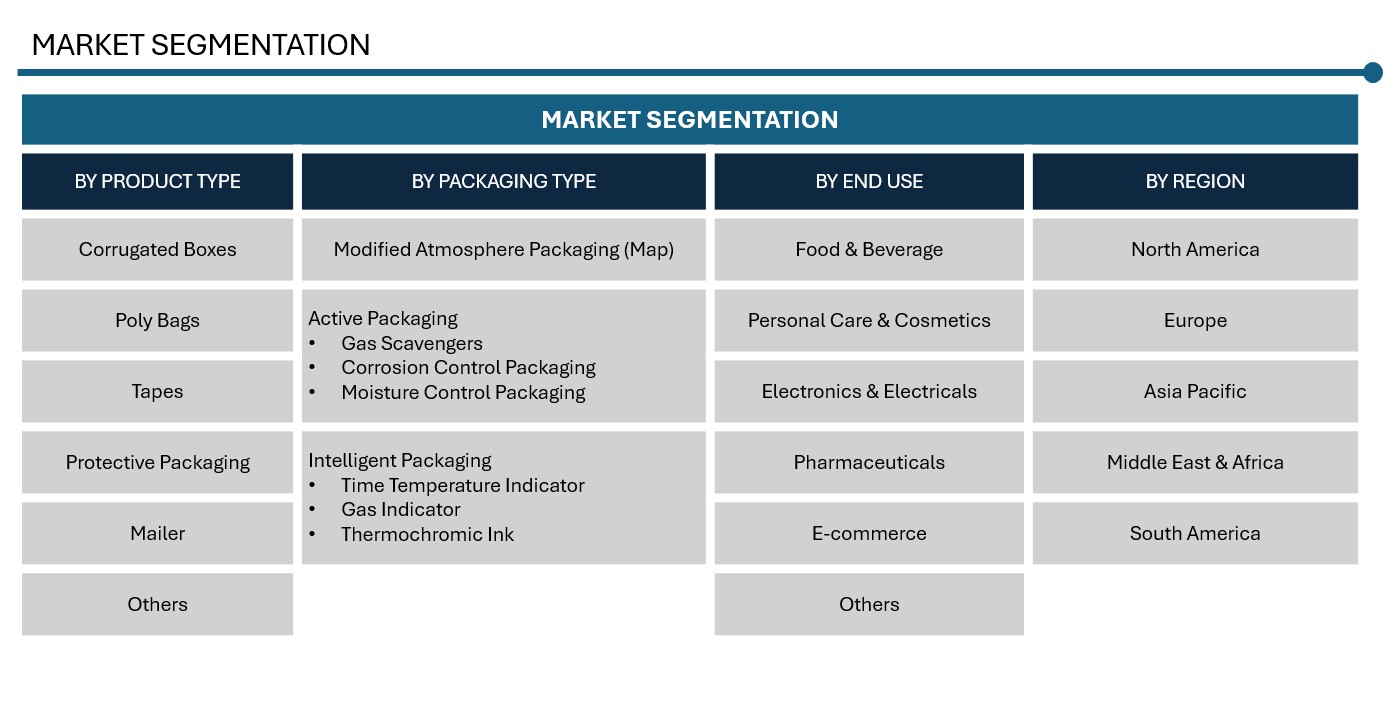
Product Type: Market Insights
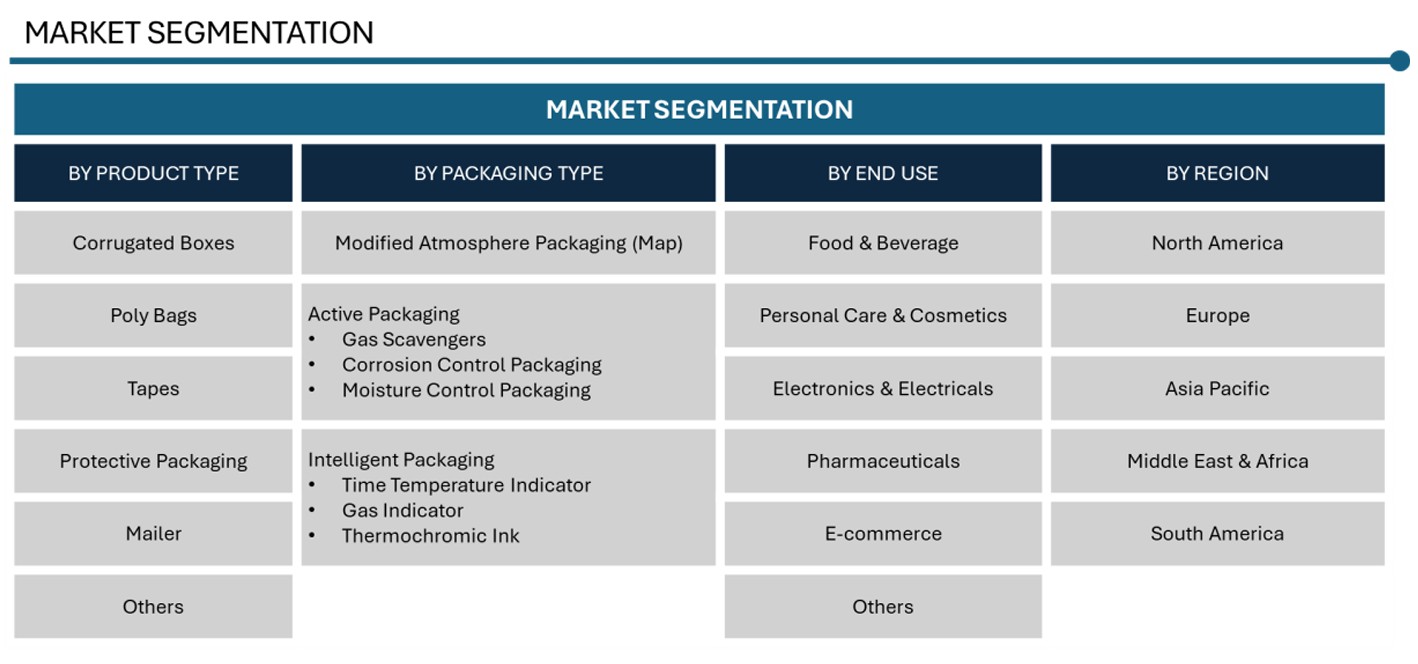
The smart packaging industry is classified by product type into categories such as corrugated boxes, poly bags, tapes, protective packaging, mailers, and more. Corrugated boxes are popular due to their durability and compatibility with smart labels and sensors, making them perfect for shipping and tracking purposes. Poly bags are lightweight, economical, and commonly used for smaller items, particularly in e-commerce and retail. Tapes are not only used for sealing but are increasingly incorporating tamper-evident and tracking capabilities. Protective packaging is crucial for safeguarding products and is often paired with smart technologies like temperature or shock indicators. Mailers, which include padded and rigid envelopes, are commonly utilized for direct-to-consumer deliveries and are being upgraded with RFID and QR code technologies.
Packaging Type: Market Insights
In terms of packaging type, the smart packaging market is divided into Modified Atmosphere Packaging (MAP), Active Packaging, and Intelligent Packaging. Modified Atmosphere Packaging increases the shelf life of products by changing the internal atmosphere of the packaging, making it suitable for perishable items such as food and pharmaceuticals. Active Packaging encompasses technologies like gas scavengers, corrosion prevention, and moisture control measures, which interact with either the product or the environment to preserve product quality and safety. Intelligent Packaging includes features such as time-temperature indicators, gas indicators, and thermochromic inks, allowing for real-time monitoring of product conditions, enhancing traceability, and boosting consumer safety and engagement.
End Use: Market Insights
The smart packaging industry is largely classified by end user into several categories: Food & Beverage, Personal Care & Cosmetics, Electronics & Electricals, Pharmaceuticals, E-commerce, and Others. The Food & Beverage category accounts for the largest market share, driven by the increasing need for freshness indicators, real-time temperature and humidity monitoring, and solutions that extend shelf life. Modified Atmosphere Packaging (MAP) and active packaging are widely utilized to stave off spoilage and preserve quality during transportation and storage. The rising consumer preference for convenience foods and heightened concerns regarding food safety further drive the implementation of smart packaging in this area. Within the Personal Care & Cosmetics category, smart packaging boosts brand perception through interactive features like QR codes, augmented reality, and authenticity checks. These technologies serve not only to engage consumers but also to ensure product quality, particularly for high-end and luxury products that face counterfeiting risks. The Electronics & Electricals sector gains from smart packaging by enhancing product safety, providing anti-tampering measures, and preventing damage. Packaging that controls moisture and corrosion is vital here, especially for delicate electronic parts. Smart labels and indicators facilitate the secure delivery of valuable products while offering tracking throughout the supply chain. In the Pharmaceutical sector, smart packaging is utilized for compliance, safety, and tracking purposes. Commonly employed technologies include time-temperature indicators and RFID tags to guarantee that medications and vaccines remain within the necessary temperature thresholds. Furthermore, smart packaging is instrumental in preventing counterfeit drugs and supporting patient adherence monitoring. The rise in E-commerce has led to an increased need for protective, tamper-evident, and traceable packaging solutions. Smart packaging innovations such as RFID and QR codes assist in tracking, verifying authenticity, and engaging customers personally. The incorporation of these technologies heightens customer satisfaction and trust in online shopping experiences. This increasing demand across various sectors underscores the growing significance of smart packaging in improving product safety, traceability, customer engagement, and overall brand reputation.
Regional: Market Insights
North America is at the forefront of the global smart packaging market, driven by a combination of sophisticated technological infrastructure, rigorous industry standards, and heightened consumer awareness. The region’s supremacy is primarily attributed to the United States, which hosts numerous leading manufacturers and technology firms in the packaging sector. These companies consistently invest in research and development to create innovative smart packaging solutions, including sensors, indicators, RFID/NFC-enabled packaging, and antimicrobial films.
The food and beverage segment is the largest end-use category in North America, with smart packaging playing a crucial role in prolonging shelf life, monitoring freshness, and ensuring safety through time-temperature indicators and gas scavengers. This is particularly vital in cold chain logistics, where real-time tracking is essential. Simultaneously, the pharmaceutical and healthcare sectors are swiftly embracing intelligent packaging for purposes such as authentication, combating counterfeiting, and ensuring adherence to dosage requirements with connected packaging.
E-commerce is yet another significant factor driving growth, as businesses employ smart packaging to enhance traceability during last-mile deliveries and foster customer engagement through features like QR codes and augmented reality. Additionally, increasing concerns over waste and environmental effects are leading to the creation of sustainable smart packaging, which utilizes biodegradable materials combined with intelligent functionalities.
Government initiatives in the United States and Canada that support food safety and drug traceability (for instance, the USA FDA’s Drug Supply Chain Security Act) are expediting the transition to smart packaging. Furthermore, high levels of smartphone usage and tech-savvy consumers are increasing the demand for interactive and connected packaging, enabling North America to sustain its leading position in this industry.
Competition: Smart packaging
The global smart packaging sector is undergoing fierce rivalry as prominent companies aim to strengthen their position by prioritizing technological advancements, sustainability, and strategic collaborations. Due to increased consumer awareness, regulatory demands, and heightened needs from sectors such as food & beverages, healthcare, electronics, and e-commerce, businesses are driven to innovate and provide more intelligent, safer, and efficient packaging options.
Major industry players are investing significantly in research and development to create packaging that not only prolongs shelf life and guarantees product safety but also boosts user engagement and optimizes supply chain efficiency with features like sensors, indicators, QR codes, and IoT integration. At the same time, the focus on sustainability has grown, with companies investigating biodegradable materials, recyclable formats, and reusable smart elements to satisfy environmental regulations and uphold their commitments to eco-friendly practices.
Additionally, these businesses are adapting to trends in automation and digital transformation by implementing AI, machine learning, and RFID technologies into their packaging solutions to improve traceability, inventory management, and consumer engagement.
Key firms in this industry include Berry Global, Amcor Limited, Smurfit WestRock PLC, Mondi Group, Stora Enso, Constantia Flexibles, Plastipak, Tetra Pak International S.A., DS Smith, Crown Holdings Inc., Coveris Group, ExxonMobil Chemical, Smurfit Kappa Group, Graphic Packaging International, WestRock Company, and Sonoco Products Company. These companies are actively broadening their global presence, forming partnerships, acquiring innovative startups, and adapting to changing market demands, thus influencing the future of the smart packaging sector through a combination of sustainability, intelligence, and performance.
GLOBA SMART PACKAGING MARKET SNAPSHOT | |
Market size in 2024 | USD 32 Billion |
Market forecast in 2032 | USD 52 Billion |
Compound Annual Growth Rate (2025-2032) | 6.1% |
Historical Data (Years) | 2022-2024 |
Forecast Data (Years) | 2025-2032 |
Growth Drivers | Rising demand for freshness and safety, Integration of IoT, RFID, and NFC in packaging enhances supply chain efficiency and product interaction, Governments mandate for secure, traceable packaging for sensitive goods like food and drugs, boosting smart solutions, Growing e-commerce and global logistics. |
Segments Covered | Product Type, Packaging Type, End Use, And Region |
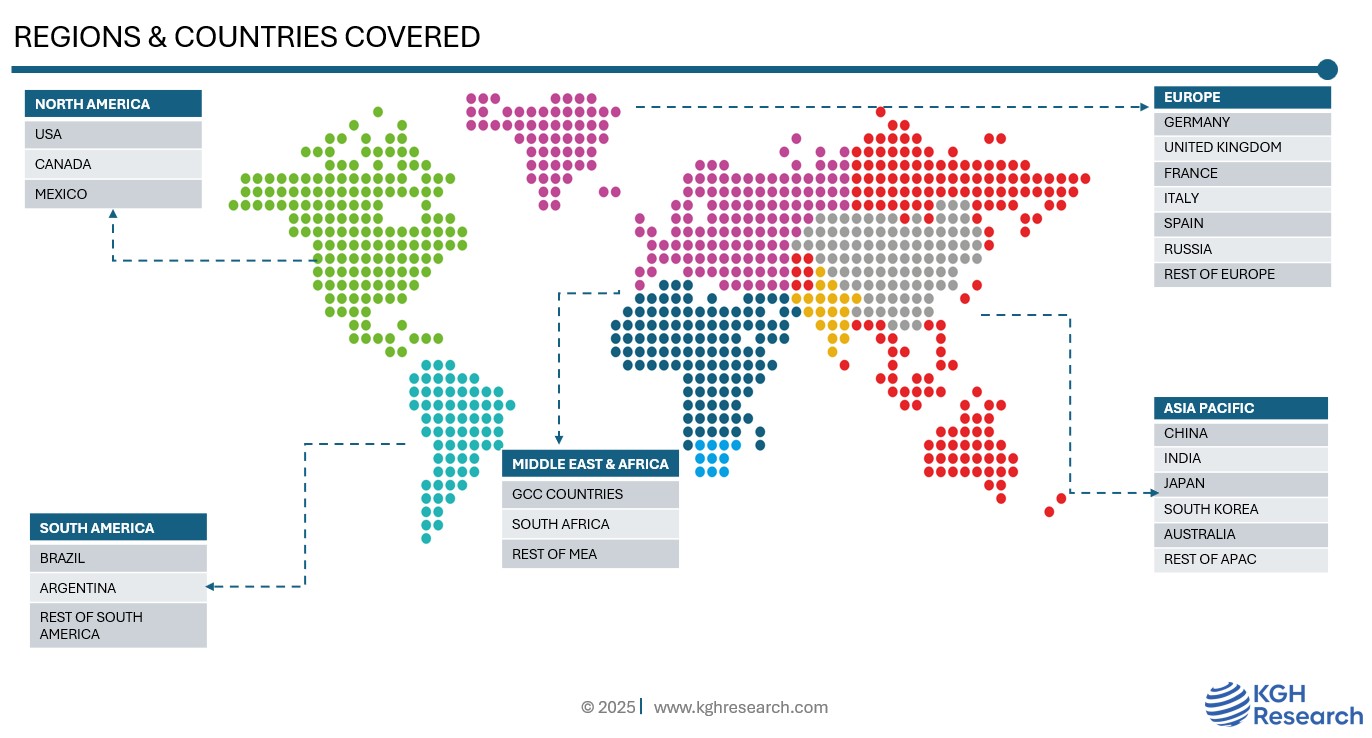
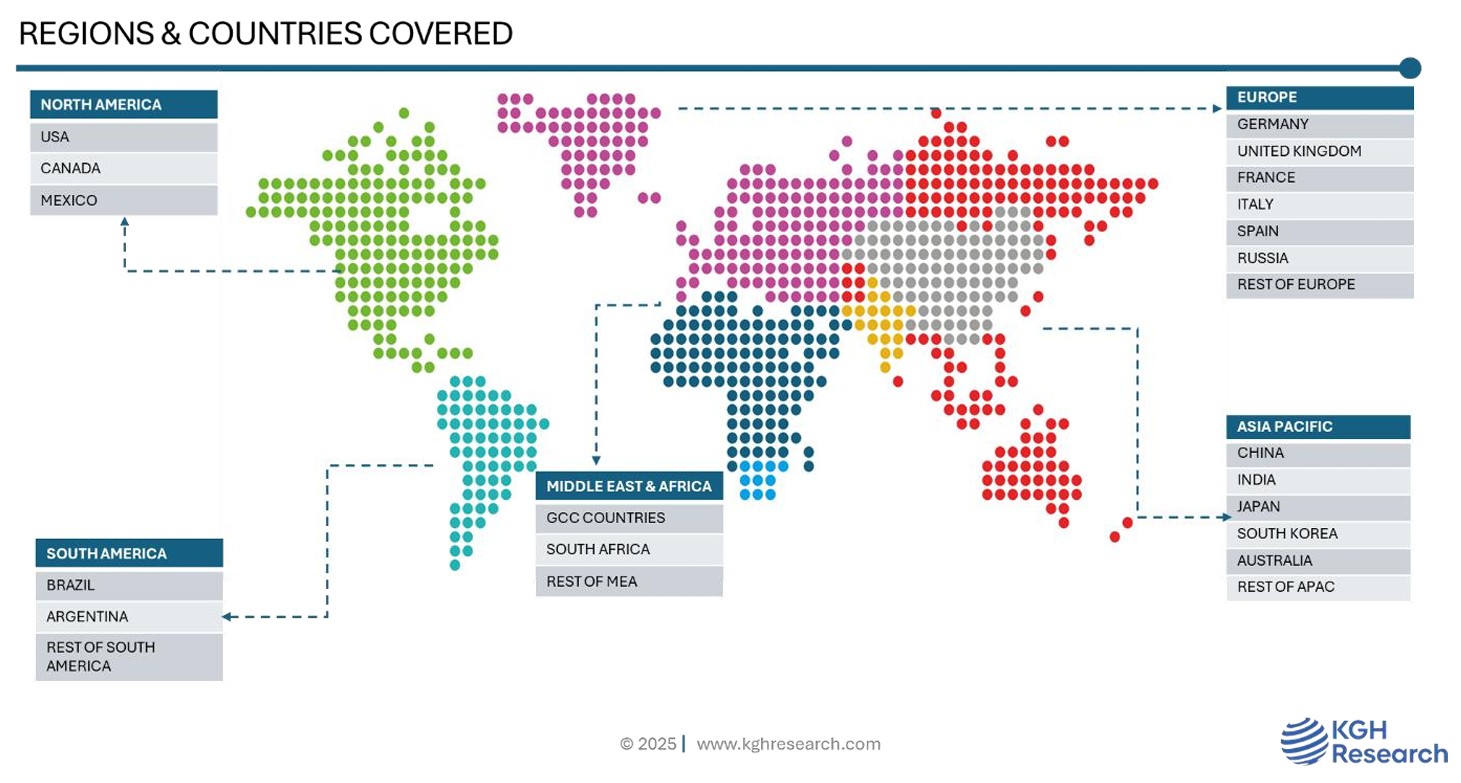
Regions Covered | North America, Europe, Asia Pacific, South America, Middle East & Africa |
Countries Covered | US, Canada, Mexico, UK, Germany, Italy, France, Spain, Russia, China, India, Japan, South Korea, Australia, South Africa, Brazil, Argentina |
Companies Profiled | AMCOR, SEALED AIR CORPORATION, BERRY GLOBAL INC., MONDI GROUP, STORA ENSO, CONSTANTIA FLEXIBLES, PLASTIPAK, TETRA PAK INTERNATIONAL S.A., DS SMITH, CROWN HOLDINGS INC., COVERIS GROUP, EXXONMOBIL CHEMICAL, 3M COMPANY, M & G USA CORPORATION, AVERY DENNISON CORPORATION, SMARTRAC N.V., SMURFIT KAPPA GROUP, GRAPHIC PACKAGING INTERNATIONAL, WESTROCK COMPANY, SONOCO PRODUCTS COMPANY, SYSCO CORPORATION, AND TEMPTIME CORPORATION, AND MANY MORE |