
At KGH Research,
We track all the key megatrends shaping the respective industry & its impact on client’s business.
The Major Pump Manufacturers Missing the Biggest Opportunity of the Era
Introduction
A trillion-dollar wave is reshaping global infrastructure, and most traditional pump manufacturers are not ready for it.
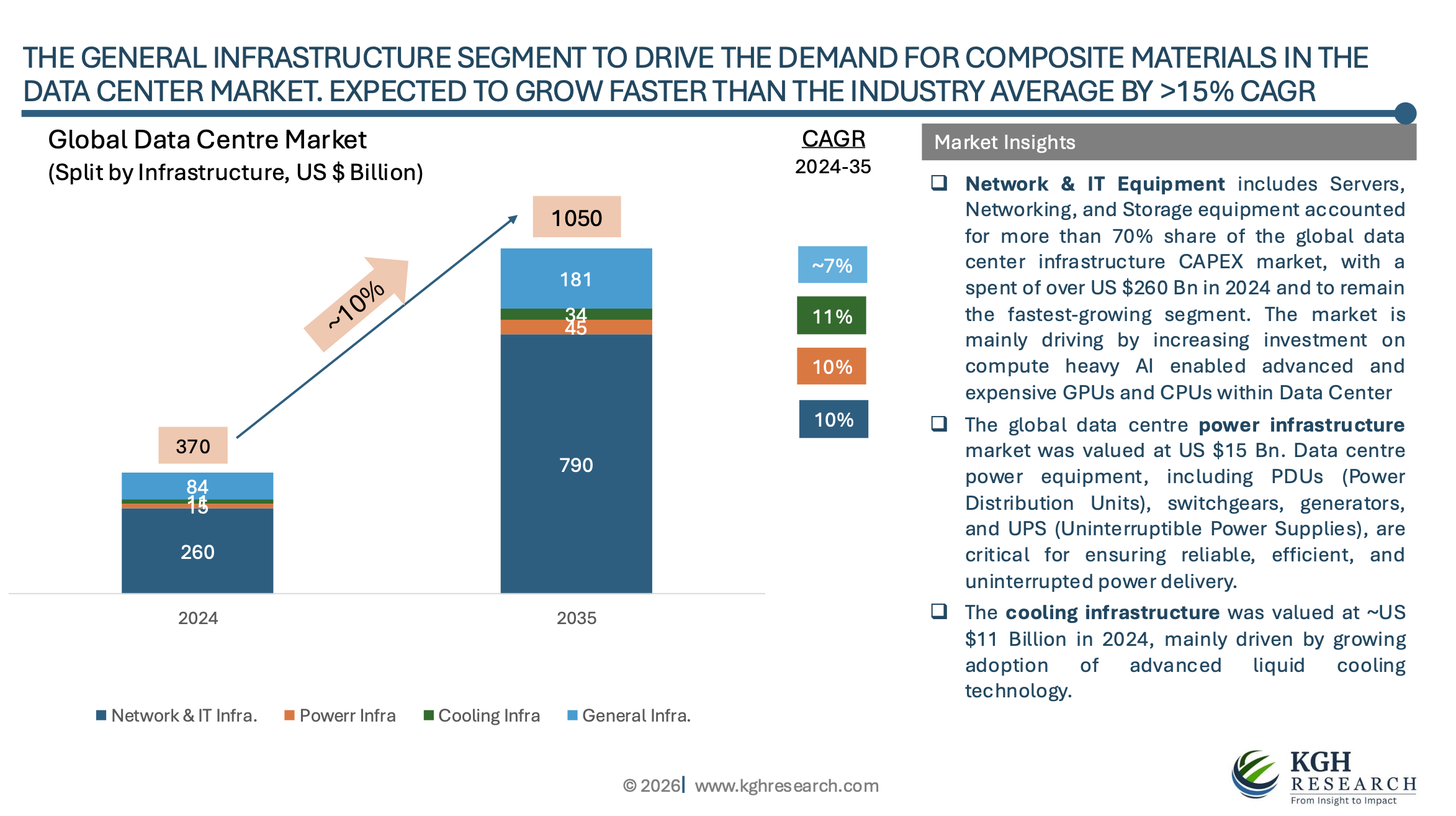
Data centers are being built at an unprecedented pace. From hyperscale campuses to edge deployments, digital infrastructure is expanding quickly to support AI, cloud computing, and real-time applications.
Yet, while this boom is creating huge demand for improved cooling systems, many legacy pump companies are sitting on the sidelines.
The biggest irony? They have supplied pumps for decades but are now missing the most important change in their own market.

A Once-in-a-Generation Infrastructure Boom
The scale of investment in data centers today is unmatched. Governments, tech giants, and private investors are pouring billions into building next-generation facilities.
But this isn’t just about building more data centers—it’s about building them differently.
Modern data centers are:
– More distributed (edge computing)
– More dense (AI workloads)
– More dynamic (scalable infrastructure)
Most importantly, they are moving toward liquid-based cooling systems, where pumps play a critical role.
Why Traditional Pump Offerings No Longer Fit
For decades, pump manufacturers focused on large, centralized industrial systems like HVAC plants, water treatment facilities, and heavy industries.
But data centers are a completely different environment.
Today’s cooling requirements demand:
– Precision flow control
– High energy efficiency
– Compact and modular designs
– Integration with digital monitoring systems
Traditional pumps, built for scale rather than agility, struggle to meet these needs.
This gap is where newer, more specialized players are gaining ground.
How Fast-Moving Entrants Are Capturing the Biggest Opportunities
While established companies rely on outdated product lines, smaller and more agile players are designing solutions specifically for modern data centers.
These companies are:
– Building compact, plug-and-play pump systems
– Integrating IoT-based monitoring and diagnostics
– Offering pre-engineered modular units
– Partnering directly with data center OEMs
Instead of selling pumps as components, they are selling solutions tailored to digital infrastructure.
This shift in approach lets them capture market share quickly, often at the expense of long-established brands.
What Needs to Change
To stay competitive, pump manufacturers must rethink their products and strategy.
Product Innovation
– Develop compact, high-efficiency pump systems
– Integrate smart controls and real-time monitoring
– Design for modular and distributed deployments
Go-To-Market Strategy
– Collaborate with data center developers and OEMs
– Focus on solution-based selling rather than components
– Build capabilities in remote diagnostics and service
Mindset Shift
Perhaps most importantly, companies must recognize that they are now entering the world of digital infrastructure, rather than just serving industrial markets.
And that requires a fundamentally different approach.
Conclusion:
The data center boom represents one of the largest infrastructure opportunities of this era. It is changing how cooling systems are designed, deployed, and managed.
For pump manufacturers, this should be a moment of dominance.
Instead, for many, it is becoming a moment of disruption.
The companies that adapt by embracing modular design, digital integration, and new business models will lead the next phase of growth.
Those that don’t may find themselves watching from the sidelines as a new generation of competitors takes their place.
Frequently Asked Questions
1. What is a CDU pump?
A CDU (Coolant Distribution Unit) pump circulates coolant through liquid-cooled data center systems, ensuring stable flow and heat removal.
2. Why are CDU pumps becoming critical now?
Rising AI workloads and high-density computing are pushing air cooling to its limits, accelerating adoption of liquid cooling.
3. How is demand expected to grow from 2026–2035?
Demand is expected to grow rapidly as every liquid-cooled deployment requires multiple pumps—creating compounding growth.
4. How are CDU pumps different from traditional industrial pumps?
They require higher precision, compact modular design, better energy efficiency, and integration with digital monitoring systems.
5. Who is best positioned to win in this market?
Companies offering modular, digitally integrated, and high-efficiency pump systems aligned with data center OEMs.
6. Why are legacy pump manufacturers at risk?
Many rely on outdated designs, slow innovation cycles, and lack digital capabilities needed for modern infrastructure.